
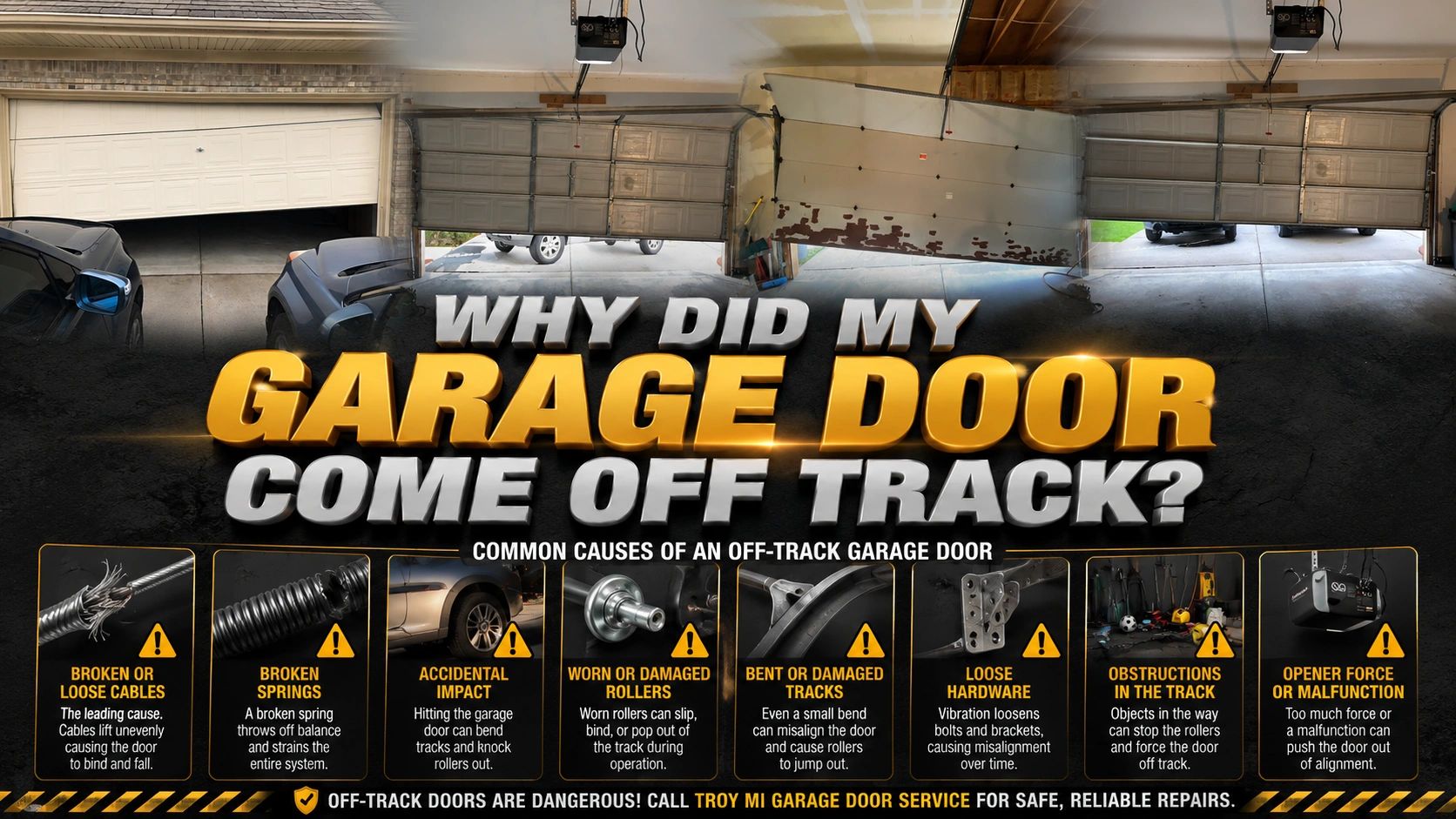
The Moment You Discover Your Garage Door Is Off Track
Imagine heading out on a crisp morning in Troy, MI, only to find your garage door stuck, crooked, or scraping violently against the frame. For countless homeowners across Southeast Michigan, this isn’t just an inconvenience—it’s a sudden safety threat. A garage door off track compromises the entire system, turning what should be a seamless operation into a potential hazard. With hundreds of pounds of steel balanced by high-tension springs and precision-aligned tracks, even a slight derailment can lead to dangerous failures. Winter’s freeze-thaw cycles and seasonal humidity common in the region accelerate wear on rollers, tracks, and brackets, making misalignment a frequent issue. Ignoring the problem or attempting to force the door open increases the risk of snapped cables, collapsing panels, or injury. Understanding why this happens—whether due to worn rollers, impact damage, or failed hardware—is essential not only to restore function but to prevent recurrence. In this guide, you’ll learn the most common causes of track misalignment, signs to watch for, and the critical steps to take to protect your household. You’ll also discover how proactive maintenance can keep your garage door operating safely through Michigan’s toughest seasons.
5 Most Common Mechanical Causes of a Derailed Garage Door
Garage doors in Southeast Michigan face unique challenges due to harsh winters, frequent freeze-thaw cycles, and shifting humidity levels—all of which contribute to mechanical wear that can lead to derailment. Understanding the most common mechanical failures helps homeowners identify warning signs early and prevent dangerous situations.
- Damaged or Worn Rollers Rollers bear the brunt of daily operation, guiding the door along the track. Over time, nylon rollers can crack or flatten, while steel rollers may lose their bearings. When a roller fails, it can jump the track or create uneven movement, especially under heavy loads or extreme temperatures common in Troy and surrounding areas.
- Loose or Misaligned Track Hardware Bolts and brackets securing the vertical and horizontal tracks can loosen from constant vibration and thermal expansion. A shifted track—even by a fraction of an inch—disrupts the door’s path, causing rollers to bind or dislodge. Regular inspection of mounting hardware can catch small shifts before they lead to full derailment.
- Cable Fraying or Slippage Lift cables manage the door’s weight alongside the torsion spring system. If one cable becomes frayed or slips off the drum, it creates an uneven lift, pulling the door sideways and forcing rollers out of alignment. This is especially dangerous in high-wind or icy conditions.
- Bent or Warped Tracks Impact from vehicles, ice buildup, or corrosion can bend tracks, preventing smooth roller movement. Even minor bends create resistance, increasing stress on springs and motors. In Michigan’s volatile climate, repeated expansion and contraction can gradually warp metal over time.
- Failed Hinges or Panel Misalignment Garage door sections are connected by hinges that can loosen or break, particularly on older or poorly maintained systems. A compromised hinge distorts the door’s shape, making it impossible for rollers to stay seated in the track.
Regular maintenance—including lubrication, visual checks, and seasonal adjustments—can extend component life and prevent off-track emergencies.
How to Safely Diagnose a Garage Door Off Its Track
If your garage door isn’t moving smoothly or appears misaligned, it may have come off track—but diagnosing the issue requires caution and attention to detail. Because garage doors operate under high tension from torsion springs and cables, improper inspection can lead to injury. Follow these steps to safely assess the problem and determine whether rollers, cables, tracks, or springs are to blame.
1. Disconnect the Opener Pull the red emergency release cord to disengage the automatic opener. This allows you to manually inspect the system without risk of sudden activation.
2. Visually Inspect from a Safe Distance Stand back and examine both vertical and horizontal tracks. Look for rollers outside the track, bent or separated track sections, or cables that have slipped off pulleys. Note any gaps or misalignments, especially near wall-mounted brackets.
3. Check Rollers and Hinges Worn, cracked, or missing rollers are common culprits. Nylon rollers degrade over time, especially in areas like Troy, MI, where winter freeze-thaw cycles increase stress on components. Steel rollers can bend or seize, preventing smooth travel.
4. Examine Cables and Springs Do not touch the torsion spring above the header or the cables running along the track. Signs of fraying, slack, or disconnection indicate a serious hazard requiring professional service.
5. Assess Track Alignment Use a level to check if tracks are plumb and parallel. Even slight warping from impact or corrosion can derail rollers.
6. Call a Certified Technician Due to the dangers involved, always rely on a trained professional for accurate diagnosis and safe repair.
The Hidden Danger of a Misaligned Garage Door
A garage door that’s off track is more than just an inconvenience—it's a serious safety hazard waiting to happen. In Troy, MI, and surrounding communities, homeowners often don’t realize how quickly a minor misalignment can escalate into structural failure. The entire garage door system is engineered for balance: torsion springs manage hundreds of pounds of pressure, rollers glide along precision-aligned tracks, and cables distribute tension evenly. When the door derails, this equilibrium collapses.
Continued operation of a misaligned door dramatically increases the risk of sudden collapse. Without proper track guidance, rollers can dislodge completely, causing the heavy steel panel to drop without warning—endangering vehicles, pets, and people. The high-tension springs, no longer operating in sync, may snap violently, sending metal debris flying at dangerous speeds. Even the garage door opener isn’t spared; forcing it to lift an unbalanced door leads to motor burnout, gear damage, and costly replacements.
Structural instability doesn’t stop at the door itself. Bent tracks, warped rollers, and loosened mounting brackets compromise the entire framework, especially after repeated strain. In Southeast Michigan’s volatile climate, freeze-thaw cycles weaken metal over time, making misalignment more common and more dangerous. The safest, smartest move is clear: stop using the door, keep the area secure, and call a certified technician to restore stability and safety.
What to Do Right Now If Your Garage Door Jumps the Track
Discovering your garage door is off track can be alarming, but knowing the correct immediate actions helps prevent injury and further damage. In regions like Southeast Michigan, where weather extremes impact garage door components, prompt and proper response is crucial. Follow these steps carefully to ensure safety and preserve system integrity.
1. Disconnect the Opener Immediately Use the red emergency release cord to disengage the automatic opener. This stops the motor from activating accidentally and reduces strain on the already compromised lift mechanism, especially the torsion spring and cables.
2. Secure the Surrounding Area Keep children, pets, and vehicles away from the garage entrance. An off-track door is unstable and could collapse without warning, particularly if the counterbalance system is weakened.
3. Assess the Situation Safely From a safe distance, check for visible signs of derailment—rollers outside the track, bent rail sections, or noticeable gaps in alignment. Do not touch or attempt to reposition the door.
4. Avoid DIY Fixes at All Costs Garage doors operate under dangerous levels of tension. Attempting repairs without proper tools and training can lead to severe injury or worsen existing damage.
5. Call a Certified Technician Schedule a service call with a licensed professional who can safely realign the door, replace damaged rollers or tracks, and restore secure operation. Timely expert intervention ensures long-term reliability and safety for your home in Troy, MI, and surrounding areas.
Frequently Asked Questions About Garage Door Track Issues
Why does my garage door come off track? Garage doors can derail due to several factors, including worn or broken rollers, bent tracks from impact, loose track hardware, or cable damage. In areas like Troy, MI, seasonal temperature fluctuations and moisture can accelerate metal fatigue and rust, increasing the risk of misalignment over time.
Is it dangerous if my garage door is off track? Yes—operating a derailed door is extremely hazardous. The system relies on balanced tension from torsion springs and cables to support hundreds of pounds. When off track, this balance is disrupted, raising the risk of sudden collapse, flying debris, or snapped cables that can cause serious injury.
Can I open or close my garage door if it’s slightly off track? No. Even minor misalignment compromises the door’s structural integrity. Attempting to move it manually or with the opener can lead to further damage or complete derailment. Always stop use immediately and keep children and pets clear of the area.
What should I do if I notice my garage door is off track? First, disconnect the opener using the red emergency release cord. Avoid touching the door or springs. Perform a visual check from a safe distance, then contact a certified technician for professional realignment and repair.
Why shouldn't I try to fix it myself? Garage doors contain high-tension components that can cause severe injury if mishandled. DIY attempts often worsen damage and void warranties. Professional technicians have the tools and expertise to safely correct alignment and replace damaged parts.
How can I prevent future track issues? Schedule biannual maintenance checks, keep tracks clean and lubricated, and address unusual noises or movement promptly. In Southeast Michigan’s climate, proactive care is key to extending system life and ensuring safe operation.
Protect Your Home with Expert Care and Smart Maintenance
A garage door that comes off track isn’t just an inconvenience—it’s a warning sign of deeper mechanical issues. From damaged rollers and bent tracks to frayed cables and compromised torsion springs, the root causes require more than a quick fix. For homeowners in Troy, MI, where seasonal temperature swings and moisture weaken metal components over time, preventative care is essential. Regular maintenance helps detect minor misalignments, worn hardware, or lubrication needs before they escalate into safety hazards or costly repairs.
Professional repair ensures your system’s balance is safely restored without risking injury. Certified technicians use specialized tools to realign tracks, replace damaged parts, and recalibrate spring tension—tasks that are dangerous for untrained individuals. To avoid future derailments, adopt a proactive stance: schedule biannual inspections, keep tracks clean and debris-free, and respond immediately to unusual noises or sluggish movement.
If your door has come off track, stop using it, disconnect the opener, and contact a licensed technician. Your household’s safety depends on expert intervention. By prioritizing professional service and routine upkeep, you extend your garage door’s lifespan and ensure smooth, secure operation year-round—especially critical during Michigan’s demanding winter months.