
Ethan the Garage Door Technician
I built this business one repair at a time.
I started working on garage doors in September 2013. Since then, I’ve repaired, installed, and maintained more than 7,000 doors—and learned that the best service begins with an honest diagnosis.
Talk directly with Ethan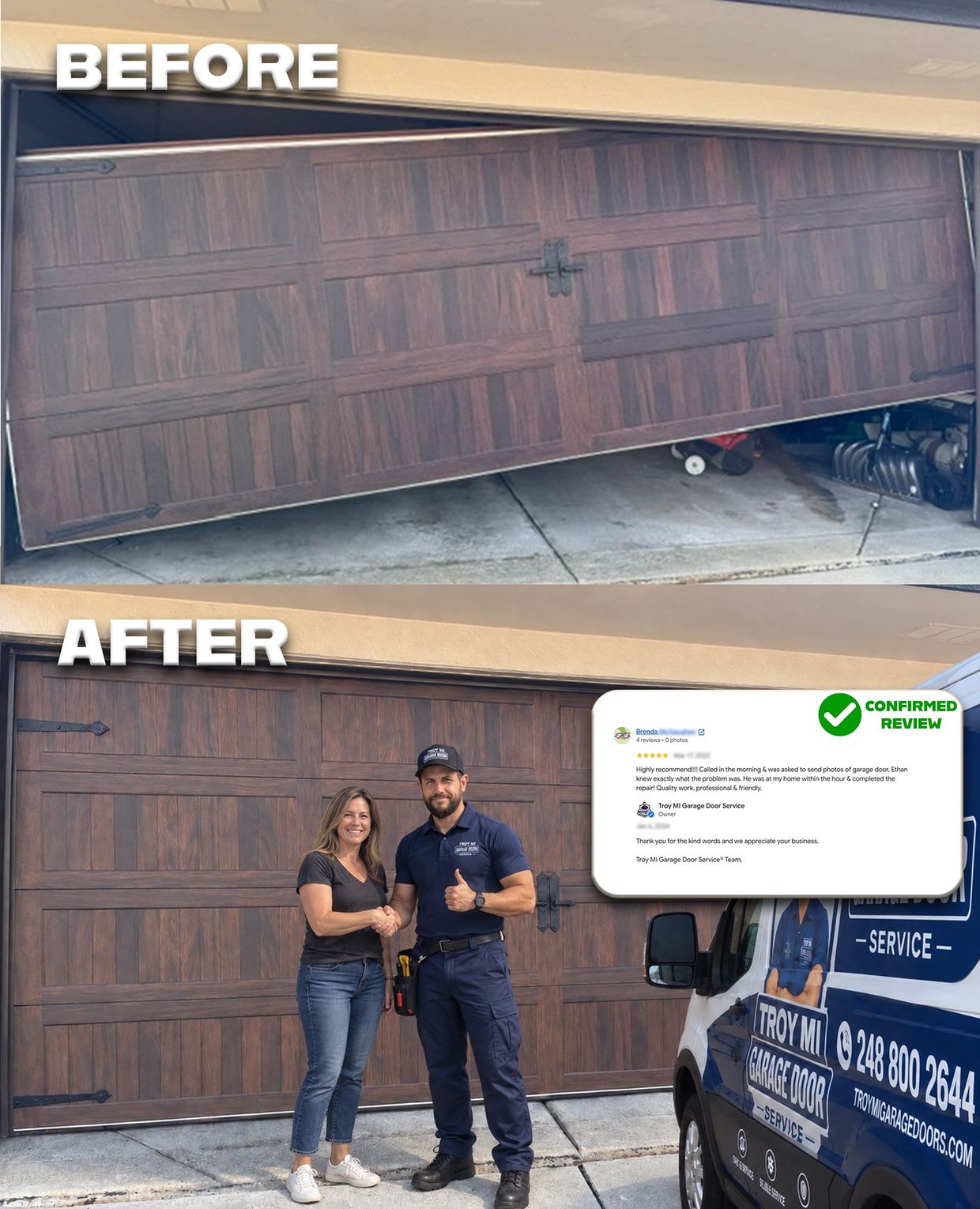
How I got here
A trade learned in garages—not behind a desk.
I entered the garage door business in September 2013. The early years were spent doing what every good technician has to do: listening carefully, getting my hands dirty, and learning how different doors behave when springs, cables, rollers, tracks, panels, and openers stop working together.
After thousands of service calls, patterns become familiar—but I never assume two doors need the same answer. A door that opens crooked might have a cable problem, a spring problem, damaged hardware, or a combination of all three. The symptom is only the beginning of the diagnosis.
More than 7,000 repaired, installed, and maintained doors have taught me when a repair is worth making, when a part is being blamed for another problem, and when replacement is genuinely the responsible recommendation. That experience helps me protect the parts of a system that still have useful life instead of treating every service call like an opportunity to sell more equipment.
Working throughout Metro Detroit also means understanding what Michigan does to a garage door. Cold mornings expose weak springs, freeze-thaw cycles affect seals and hardware, and road salt attacks cables and bottom fixtures. A repair should account for the environment the door works in—not only the part that failed today.
I built Troy MI Garage Door Service around the kind of service I would want at my own home: direct communication, a clear explanation, a price before work begins, and a finished door that is balanced and tested—not merely moving again.
What guides the work
A repair should make sense before it begins.
- Explain the failure. You should know what broke and why it matters.
- Preserve what is worth saving. A damaged-looking door does not automatically need replacement.
- Use the right part. Springs, cables, rollers, and openers must match the complete system.
- Test the result. The job is not finished until the door is balanced and operating safely.
What experience changes
Patterns become easier to recognize after thousands of doors.
Two doors can show the same symptom for completely different reasons. Hands-on repetition helps separate the obvious failure from the condition that caused it.
Balance before motor power
An opener can hide a heavy or binding door for a while. Testing by hand shows whether the counterbalance system is doing its job.
Repair before replacement
Panels, tracks, and hardware are evaluated on their actual condition. A damaged-looking door may still be safely and economically restored.
Communication before approval
I explain the problem in plain language so you can approve the repair knowing what it solves and why it is recommended.
What working with me looks like
One technician. Four clear steps.
The process is deliberately simple. You should always know what is happening, what I recommend, and what the repair is intended to solve.
- 01
I listen before I diagnose.
Tell me what the door did, what you heard, and whether it is open, closed, crooked, or trapping a vehicle. Photos by text often provide useful context before I arrive.
- 02
I inspect the door as a complete system.
Springs, cables, drums, rollers, tracks, hinges, panels, and the opener affect one another. I look for the cause of the failure instead of stopping at the most obvious damaged part.
- 03
I explain the options and price.
You hear what failed, what can be preserved, and why I recommend a particular repair. Work begins only after the plan and price have been explained.
- 04
I balance, adjust, and test the result.
After the repair, I operate the door through its travel, check balance and cable tracking, reconnect the opener when appropriate, and verify that the completed system works together.
Direct access
The person answering is the person doing the work.
Call when the situation is easier to explain out loud.
Describe the sound, movement, and where the door stopped. I can ask the questions that narrow down the likely cause.
Text when a picture tells the story faster.
A wide photo plus a close-up of the spring, cable, track, or opener can help me understand the system before arriving.
Expect the recommendation to be specific to your door.
The goal is not a scripted sale. It is a repair plan based on the door’s construction, condition, balance, and daily use.
Garage door repair done right.