
A Hidden Hazard Lurking Above Your Garage Floor
Every year, countless homeowners across Parma overlook a silent but serious threat—the gradual breakdown of their garage door’s track system. When a garage door shifts off its intended path, it doesn’t just impair functionality; it creates an immediate safety risk. The immense weight of a standard residential garage door, often exceeding 300 pounds, relies on a precisely balanced mechanism of springs, cables, rollers, and tracks. Once the door comes off track, that balance collapses, increasing the likelihood of sudden failure. In Parma’s variable climate, where seasonal temperature swings and humidity accelerate metal fatigue, track misalignment becomes even more common.
Left unchecked, an off-track door can lead to irreversible damage: bent tracks, shattered rollers, or even a complete system derailment that compromises the door’s structural integrity. Worse, an unbalanced door may drop without warning, threatening cars, property, and family members. Unusual noises like grinding, banging, or scraping during operation are often the first red flags. Similarly, visible gaps between the door and track, or a door that hesitates or jerks during movement, signal urgent attention is needed.
This guide will help you identify the early warning signs, understand the dangers, and take proactive steps to maintain safe, reliable operation—all critical for Parma homeowners preparing for Michigan’s seasonal extremes.
7 Clear Warning Signs Your Garage Door Is Coming Off Track
Recognizing the early signs of a garage door coming off track can prevent costly damage and dangerous malfunctions. Homeowners in Troy, MI, and surrounding areas should stay alert to these key visual and auditory indicators—especially given the region’s extreme temperature swings that stress metal components.
- Uneven Door Movement During Operation If one side of the door lifts faster than the other or appears to sag, it’s a classic sign of misalignment. This imbalance often stems from damaged rollers, broken cables, or track deformation and increases strain on the opener and spring system.
- Loud Grinding or Scraping Noises A consistent grinding sound during operation typically signals rollers struggling within misaligned or dirty tracks. In some cases, the roller bracket may be bent, forcing the wheel to rub against the track’s edge.
- Visible Roller Displacement During a visual inspection, check if any rollers have shifted sideways or popped out of the track. This is a critical red flag—especially near the top and bottom bends—indicating the door is partially derailed.
- Gaps Between the Door and Track Shine a flashlight along the length of the track. If you see a gap between the roller and the track wall, the system is beginning to separate. This often precedes a full derailment if not corrected.
- Sticking or Jerking During Motion A smooth garage door should operate quietly and fluidly. If it jerks, sticks, or requires multiple attempts to open, it may be catching on a bent section of track or a dislodged roller.
- Misaligned Tracks or Bent Sections Inspect the vertical and horizontal tracks for warping, especially after storms or accidental impacts. Even a small bend can force rollers off course and lead to off-track incidents over time.
- Excessive Vibration or Shaking Severe wobbling during operation suggests imbalance or hardware failure. Loose rollers, worn hinges, or unsecured track brackets often contribute to this instability.
If you observe any of these signs, stop using the garage door and schedule a professional evaluation. In Southeast Michigan’s demanding climate, early detection is key to avoiding emergency repairs and ensuring household safety.
How to Perform a Safe Visual Inspection of Your Garage Door System
Catching early signs of derailment can prevent costly repairs and dangerous malfunctions. Homeowners in Troy, MI, and surrounding Southeast Michigan areas should conduct biannual visual inspections to identify issues before harsh weather worsens them. Follow these steps carefully to assess your garage door’s rollers, tracks, cables, and alignment—safely and effectively.
1. Disconnect the Opener and Keep the Door Closed Pull the red release cord to disengage the automatic opener. Ensure the door is fully closed and stable; never inspect an open or raised door. This prevents accidental movement and eliminates tension-related risks during inspection.
2. Examine Rollers for Wear or Misalignment Start at the bottom and trace each roller along the track. Look for cracked nylon rollers, bent metal stems, or rollers sitting crooked in the track. Stuck or wobbly rollers are early signs of potential derailment.
3. Inspect Tracks for Bends or Obstructions Check both vertical and horizontal tracks for dents, warping, or debris. Use a level to verify tracks are plumb and aligned. Even slight bends—common after accidental impacts—can force rollers off course.
4. Scan Cables for Fraying, Rust, or Slack Run your eyes along the full length of both lift cables. Frayed strands, kinks, or visible rust indicate weakening. A loose cable is a major red flag, especially if one side appears saggy.
5. Verify Balanced Door Movement Manually lift the door halfway. It should rise smoothly and stay in place. If it drifts or binds, internal imbalance could be leading to track failure.
Regular checks like these help catch broken garage cable issues early and maintain safe operation in Michigan’s freeze-thaw climate.
What Forces Are at Play When Your Garage Door Loses Its Track?
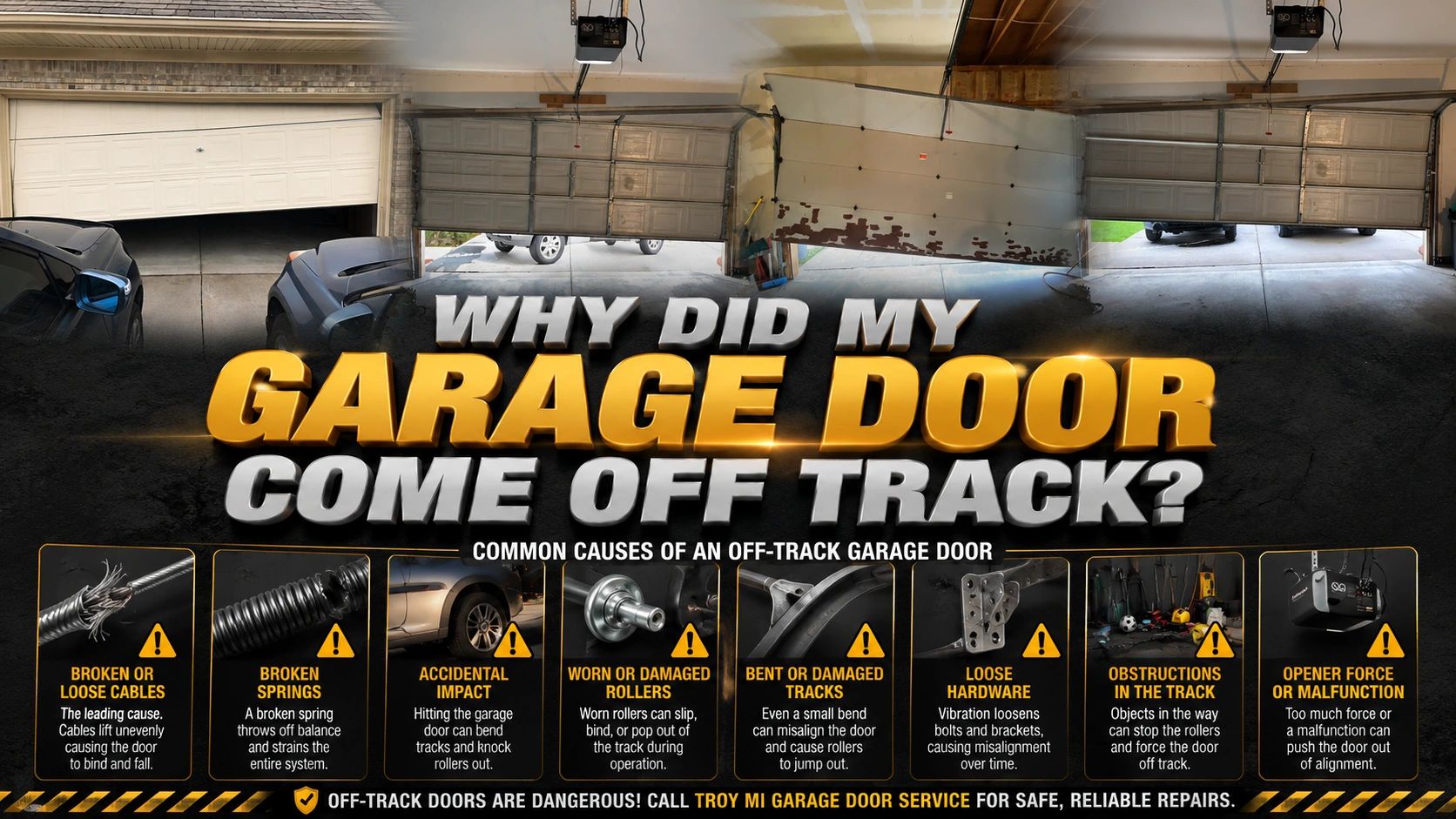
Garage door derailment isn’t usually a random event—it’s the result of mechanical stress, environmental factors, and component wear. In Parma, MI, where seasonal freeze-thaw cycles and humidity levels fluctuate dramatically, garage doors endure constant strain on critical parts like rollers, tracks, cables, and hinges. Understanding the root causes can help homeowners catch early signs of trouble before a full derailment occurs.
Damaged or worn rollers are one of the most frequent culprits. Over time, nylon or steel rollers degrade, especially when cracked, chipped, or misaligned. In colder months, ice buildup around rollers can force them out of alignment, making smooth travel through the track impossible. Similarly, bent tracks—often caused by accidental impacts from ladders, tools, or vehicles—prevent rollers from moving freely, leading to binding or sudden dislodging.
Cable failures are another major contributor. Cables maintain tension to balance the door’s weight. When frayed or snapped, the imbalance pulls the door sideways, forcing rollers off track. Rust and corrosion, accelerated by Parma’s moist spring air, weaken cables prematurely.
Accumulated debris—like leaves, dirt, or cobwebs—can also jam tracks, creating resistance that strains the system. Regular cleaning and lubrication of tracks and rollers can prevent many of these issues. Homeowners should inspect tracks monthly and schedule biannual maintenance to ensure safe, smooth operation year-round.
What to Do Immediately When You Suspect Your Garage Door Is Off Track
If your garage door begins to jerk, shift unevenly, or makes grinding noises during operation, it may already be partially off track. The very first step is to stop using the door immediately—continuing to operate it can worsen misalignment, damage rollers, bend tracks, or even lead to sudden collapse. Garage doors are under high tension from springs and cables, and forcing movement when components are compromised poses serious safety risks, especially in households with children or pets.
Begin by disengaging the automatic opener using the red release cord to prevent accidental activation. Visually inspect the tracks on both sides for obvious gaps, misaligned rollers, or obstructions like debris or ice buildup—common in Troy, MI, during winter thaw cycles. Never attempt to manually force the door back into alignment, as this can result in injury or further mechanical stress.
Instead, contact a licensed garage door technician who has the tools and expertise to safely realign the system. Professionals will assess spring tension, check for damaged rollers or bent track sections, and make precise adjustments without risk. In Southeast Michigan’s climate, where metal components are prone to expansion and contraction, timely intervention prevents recurring issues and extends system lifespan.
What Homeowners in Troy, MI Need to Know About Off-Track Garage Doors
What are common signs my garage door is coming off track? Look for visible misalignment, such as the door sagging on one side or rollers not sitting properly within the track. You might also notice uneven movement during opening and closing, scraping or grinding noises, or the door getting stuck partway. In Southeast Michigan’s fluctuating climate, metal components can expand and contract, increasing the risk of track warping or roller damage—so stay vigilant, especially after extreme weather.
Can a broken cable cause my garage door to go off track? Yes—cables maintain balance by distributing the door’s weight evenly. When one breaks, the unbalanced lift forces rollers out of alignment, often causing derailment. This is particularly common in older systems where wear has already weakened components.
Is it dangerous if my garage door is off track? Extremely. An off-track door can collapse without warning, posing serious injury risks to people and pets. It also places strain on the opener, motor, and other hardware, leading to costly secondary damage.
Should I try to reposition an off-track door myself? No. Garage doors operate under high tension, especially near torsion springs and cables. Attempting manual repositioning without proper tools and training can result in sudden failure or injury. Always call a qualified technician.
How can I prevent my garage door from going off track? Schedule biannual inspections, keep tracks clean and lubricated with silicone-based spray, and watch for early signs of wear like fraying cables or loose hardware. Prompt professional maintenance is key to long-term reliability.
Take Action Now to Protect Your Home and Family
Ignoring early warning signs of a misaligned or struggling garage door can lead to dangerous malfunctions and expensive repairs. When components like cables, rollers, or tracks begin to fail, the entire system’s integrity is at risk. In areas like Troy, MI, where seasonal temperature swings stress metal parts, proactive maintenance isn’t just smart—it’s essential. A door that jerks, tilts, or makes grinding noises is signaling imbalance, often due to a broken cable or off-track roller. Continuing to operate it increases the chance of sudden collapse, which poses serious safety risks to people, pets, and vehicles. Beyond safety, unresolved issues can overload the opener motor or warp tracks, leading to repairs far costlier than routine service. Remember, garage door systems rely on precise calibration—especially high-tension parts like torsion springs and lift cables. These aren’t tasks for DIY troubleshooting. The best course of action is clear: at the first sign of trouble, stop using the door and schedule a professional inspection. Certified technicians can safely diagnose the root cause, restore proper alignment, and replace worn components. Protect your home’s functionality and your family’s safety by prioritizing expert maintenance—especially before Michigan’s harsh winter months set in.