
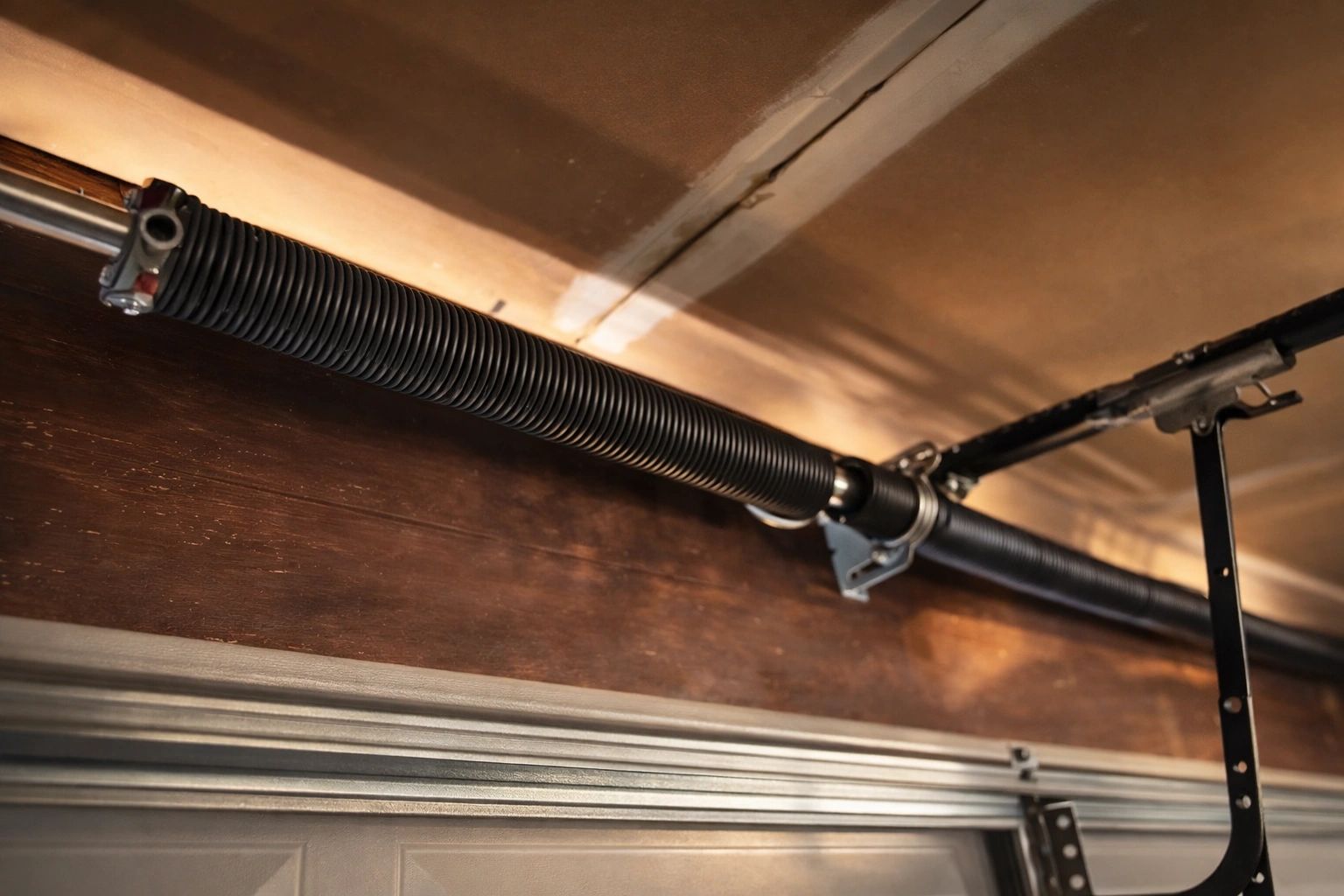
When a Garage Door Spring Breaks, Everything Changes Instantly
A garage door spring doesn’t fail quietly. It doesn’t give you weeks of warning or a slow decline like other mechanical parts. When it breaks, it happens in a split second with a loud snap that often sounds like something crashing inside your garage. Homeowners in Troy, MI call me all the time saying they thought something fell off the roof or a shelf collapsed. That’s how violent the release of tension is.
From that exact moment forward, your garage door is no longer operating the way it was designed to. The entire weight of the door, which was once balanced and controlled, is now unsupported. What you’re dealing with is no longer just an inconvenience. It becomes a serious mechanical and safety issue.
The biggest mistake I see homeowners make is trying to “test it” after the spring breaks. They’ll hit the wall button or remote just to see if the door still works. Sometimes it moves a few inches. Sometimes the opener struggles and makes noise. That alone can cause more damage than the original break.
Why the Spring Is the Most Important Component in Your Garage Door System
Most people assume the opener is doing all the heavy lifting. It’s not. The garage door spring is responsible for carrying almost all of the weight. The opener is simply guiding the motion.
A typical residential garage door weighs anywhere between 130 and 300 pounds depending on size and material. Without a functioning spring, that full weight becomes dead weight. Your opener is not built to lift that. It’s designed to move a properly balanced system, not fight against gravity.
When the spring snaps, the system becomes unbalanced instantly. That imbalance puts strain on every other component, including the opener, cables, drums, and tracks. This is why a simple spring failure can quickly turn into a much larger repair if the door continues to be used.
The Real Risks of Operating a Door with a Broken Spring
Continuing to use your garage door after a spring breaks is where things start to get dangerous. I’ve seen doors slam shut unexpectedly, cables unravel, rollers pop out of track, and openers burn out completely.
There’s also a serious safety concern. A garage door without spring support can drop with full force. If someone is underneath when that happens, the consequences can be severe. This is not something to take lightly.
In Troy, where many homes rely heavily on garage access during cold months, people feel pressured to keep the door functioning. But forcing it to work without the spring in place is the fastest way to turn a repair into a full system replacement.
Signs That Your Spring Has Already Been Failing
In most cases, a spring doesn’t just break out of nowhere. There are warning signs leading up to it, but they often go unnoticed or ignored.
Homeowners might notice the door feeling heavier than usual. The opener might start hesitating or straining. The door may not stay in place when manually lifted. These are all signs that the spring is losing tension.
Another common sign is visible separation in the spring itself. A torsion spring will often show a gap once it snaps, but even before that, wear and tear can sometimes be spotted if you know what to look for.
By the time the spring fully breaks, the system has already been under stress for a while.
What You Should Do Immediately After a Spring Breaks
The first thing to do is stop using the door. Do not attempt to open or close it electrically or manually unless absolutely necessary. If the door is stuck in the open position, that’s a different situation that needs to be handled carefully, but in most cases, the safest move is to leave it alone.
Disconnecting the opener can help prevent accidental use. If the door is partially open, it should be secured to prevent it from falling. This is where calling a professional becomes critical.
In Troy, homeowners often look for quick fixes or temporary solutions, but with springs, there really isn’t one. This is a high-tension component that requires proper tools, knowledge, and experience to replace safely.
Why Spring Replacement Is Not a DIY Job
I understand the appeal of trying to fix things yourself. But garage door springs are not like changing a roller or tightening a bolt. These springs are under extreme tension, and releasing or installing them incorrectly can cause serious injury.
There’s a reason technicians use specialized winding bars and follow precise procedures. Even a small mistake can result in the spring snapping or the bar slipping.
Over the years, I’ve seen homeowners attempt DIY spring repairs and end up calling after things go wrong. By that point, the repair is often more complicated than it needed to be.
Choosing the Right Type of Spring Replacement
Not all springs are created equal. One of the biggest differences comes down to cycle life. Standard springs are often rated for around 10,000 cycles, which might sound like a lot, but for an average household, that can wear out in just a few years.
Higher cycle springs are designed to last significantly longer. For homeowners in Troy who use their garage as a primary entrance, upgrading to a higher cycle spring makes a lot of sense.
Another important factor is proper sizing. The spring must be matched to the exact weight and dimensions of the door. Using the wrong spring can lead to improper balance, which puts stress on the entire system.
What a Proper Spring Repair Should Include
A true professional spring repair is not just about swapping out the broken spring. It involves inspecting the entire system to ensure everything is working together correctly.
This includes checking the cables, drums, bearings, and alignment of the door. The door should be balanced so that it stays in place when lifted halfway manually. The opener should not be straining during operation.
In many cases, replacing both springs at the same time is recommended, even if only one has broken. If one spring has failed, the other is usually not far behind.
Why Troy Homeowners Trust Experience Over Guesswork
After more than a decade working on garage doors, I’ve learned that experience matters. Every door is different. Every setup has its own quirks. Knowing how to diagnose and fix the issue properly the first time makes all the difference.
Homeowners in Troy are not just looking for a quick fix. They want a long-term solution that keeps their door running safely and smoothly.
A broken spring is one of the most common issues, but it’s also one of the most critical. Handling it correctly from the start prevents bigger problems down the line.
Final Thoughts: Don’t Wait Until It Gets Worse
If your garage door spring has snapped, it’s not something to delay. The longer the system remains in that state, the higher the risk of additional damage or safety concerns.
The right approach is simple. Stop using the door, avoid DIY fixes, and get it handled properly. A professional repair restores balance, protects your equipment, and most importantly, keeps your home safe.