
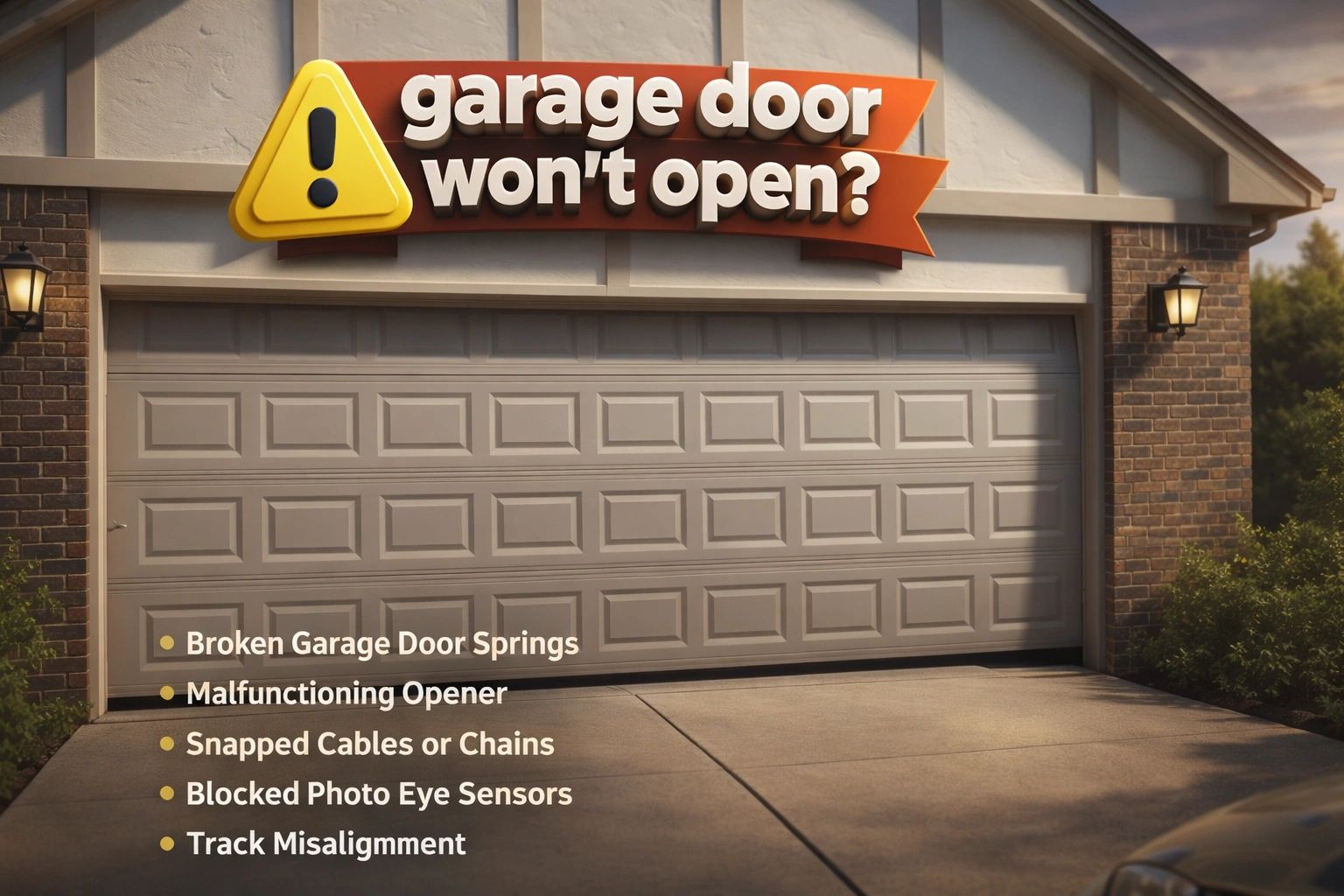
Introduction: When Your Garage Door Fails at the Worst Time
It always happens at the worst possible moment.
You’re late for work. It’s freezing outside. You hit the opener… and nothing happens.
Or worse—the door starts moving and suddenly stops halfway.
After more than a decade in this business, I’ve seen it all. And I can tell you—what you do in the first few minutes matters more than you think.
This guide will walk you through exactly what to do (and what NOT to do) when your garage door suddenly fails.
Step 1: Stay Calm and Don’t Force Anything
This is the biggest mistake homeowners make.
If your door:
- Won’t open
- Won’t close
- Feels heavy
DO NOT force it.
Trying to “muscle it” can:
- Snap cables
- Burn out your opener
- Cause the door to go off-track
Step 2: Identify the Type of Problem
You don’t need to be a technician—but a quick check helps.
Common Emergency Scenarios:
Broken Spring
- Loud bang before failure
- Door suddenly feels very heavy
- Door won’t lift properly
Snapped Cable
- Door looks crooked
- One side hangs lower
- Grinding or jerking movement
Opener Failure
- Motor runs but door doesn’t move
- Remote doesn’t respond
Step 3: Disconnect the Opener Safely
Most garage doors have an emergency release cord.
Pulling it allows you to operate the door manually.
⚠️ Important: Only do this if the door is fully closed.
If it’s stuck halfway, disconnecting it can cause it to crash down.
Step 4: Secure Your Home
If your door won’t close:
- Do NOT leave it open overnight
- Block it temporarily if needed
- Avoid leaving valuables exposed
Your garage is one of the most common entry points into a home.
Step 5: Know When It’s Dangerous
Some situations are NOT DIY-friendly.
Never attempt to fix:
- Springs (extreme tension)
- Cables under load
- Doors off-track
Garage doors operate under high tension, and mishandling them can cause serious injury .
Step 6: Temporary Fixes (If You Must)
If you absolutely need access:
- Use a second entry door if available
- Carefully lift the door with help (if springs are intact)
- Avoid repeated opening/closing
This is a temporary solution—not a fix.
Step 7: Call a Professional (The Right Way)
Not all service calls are equal.
When you call:
- Describe the symptoms clearly
- Mention sounds, movement, or visible damage
- Ask if parts are in stock
This helps the technician fix the issue in one visit.
Real-Life Example From the Field
I once had a customer try to force a door with a broken spring.
What started as a simple $250 repair turned into:
- Damaged opener
- Bent track
- Cable failure
Total cost tripled.
All because of one mistake: forcing the system.
Why Garage Doors Fail Without Warning
Most failures aren’t actually sudden—they’re ignored warning signs.
Look out for:
- Slow movement
- Loud noises
- Uneven lifting
- Vibrations
Catching these early can prevent emergencies entirely.
Preventing Future Emergencies
The best emergency is the one that never happens.
Basic Maintenance Tips:
- Lubricate moving parts
- Inspect cables and springs
- Test balance periodically
- Schedule annual service
Even simple maintenance can extend the life of your system significantly.
Final Thoughts: Be Smart, Not Reactive
A broken garage door is stressful—but it doesn’t have to turn into a disaster.
The key is knowing:
- When to act
- When to stop
- When to call a professional
Treat your garage door like any major system in your home—with awareness, respect, and proper care.
Because when it fails, it doesn’t just inconvenience you—it can affect your safety, your schedule, and your home.