If you’re standing in your driveway pressing the remote over and over while your garage door refuses to move, you’re not alone. After more than a decade working as a garage door repair technician, I can tell you this is one of the most common calls we receive. A garage door that won’t open or won’t close can instantly disrupt your day, trap your vehicle inside, or leave your home exposed.
The good news is that most garage door problems follow predictable patterns. With a little understanding, you can tell whether you’re dealing with a simple issue or something that needs professional attention right away. This guide will calmly walk you through the most common reasons a garage door gets stuck, what’s happening behind the scenes, and when it’s time to stop troubleshooting and call for help.
Most Common Reasons a Garage Door Won’t Open or Close
A garage door is a system, not just a motor and a button. Springs, cables, rollers, tracks, sensors, and electronics all have to work together in balance. When one component fails or slips out of alignment, the entire system can shut down.
In real-world service calls, these are the issues we see most often when a garage door won’t open or close:
- Sensor alignment or obstruction problems
- Broken or failing springs
- Opener motor or logic board issues
- Track obstructions or bent rails
- Frayed or off-track cables
- Safety mechanisms doing exactly what they’re designed to do
Understanding which category your issue falls into can save you time, stress, and unnecessary damage.
Sensor Issues and Alignment Problems
When the Garage Door Won’t Close but Opens Fine
If your garage door opens normally but refuses to close — or starts closing and immediately reverses — the safety sensors are the first thing to check.
Modern garage doors use photo-eye sensors mounted near the bottom of the tracks. These sensors shoot an invisible beam across the opening. If anything interrupts that beam, the door will not close.
Common real-life causes include:
- A trash can, bicycle, or storage box near the sensor line
- Dirt, spider webs, or moisture on the sensor lenses
- One sensor being slightly bumped out of alignment
- Sunlight interference during certain times of day
I’ve seen doors refuse to close simply because a leaf blew across the sensor beam. Cleaning the lenses and ensuring both sensors are facing each other squarely often solves the issue.
When Sensors Become a Repeating Problem
If your sensors constantly lose alignment, that’s usually a sign of a loose mounting bracket or a slightly twisted track. While it may seem minor, repeated misalignment is a warning that something else may be shifting in the system.
Broken Springs vs Opener Problems
The Silent Power Behind Your Garage Door
One of the biggest misconceptions homeowners have is thinking the opener lifts the door. In reality, the springs do most of the heavy lifting. The opener simply guides the door up and down.
When a spring breaks, the opener often can’t move the door at all.
Signs of a Broken Garage Door Spring
If your garage door won’t open or feels extremely heavy, a broken spring is a strong possibility. Common signs include:
- A loud bang from the garage, often mistaken for something falling
- The door lifting a few inches and stopping
- The opener motor running but the door not moving
- A visible gap in the torsion spring above the door
This is one of the most serious garage door issues. Springs are under extreme tension, and attempting DIY spring repair is genuinely dangerous.
How Opener Problems Feel Different
When the opener is the issue, the symptoms are usually electrical or inconsistent:
- Clicking sounds without movement
- The door stopping halfway and reversing
- The opener responding sometimes but not others
- Flashing lights or error codes on the motor unit
In these cases, the door may still move manually, which helps distinguish opener problems from spring failures.
Track Obstruction and Cable Issues
When the Door Gets Stuck or Crooked
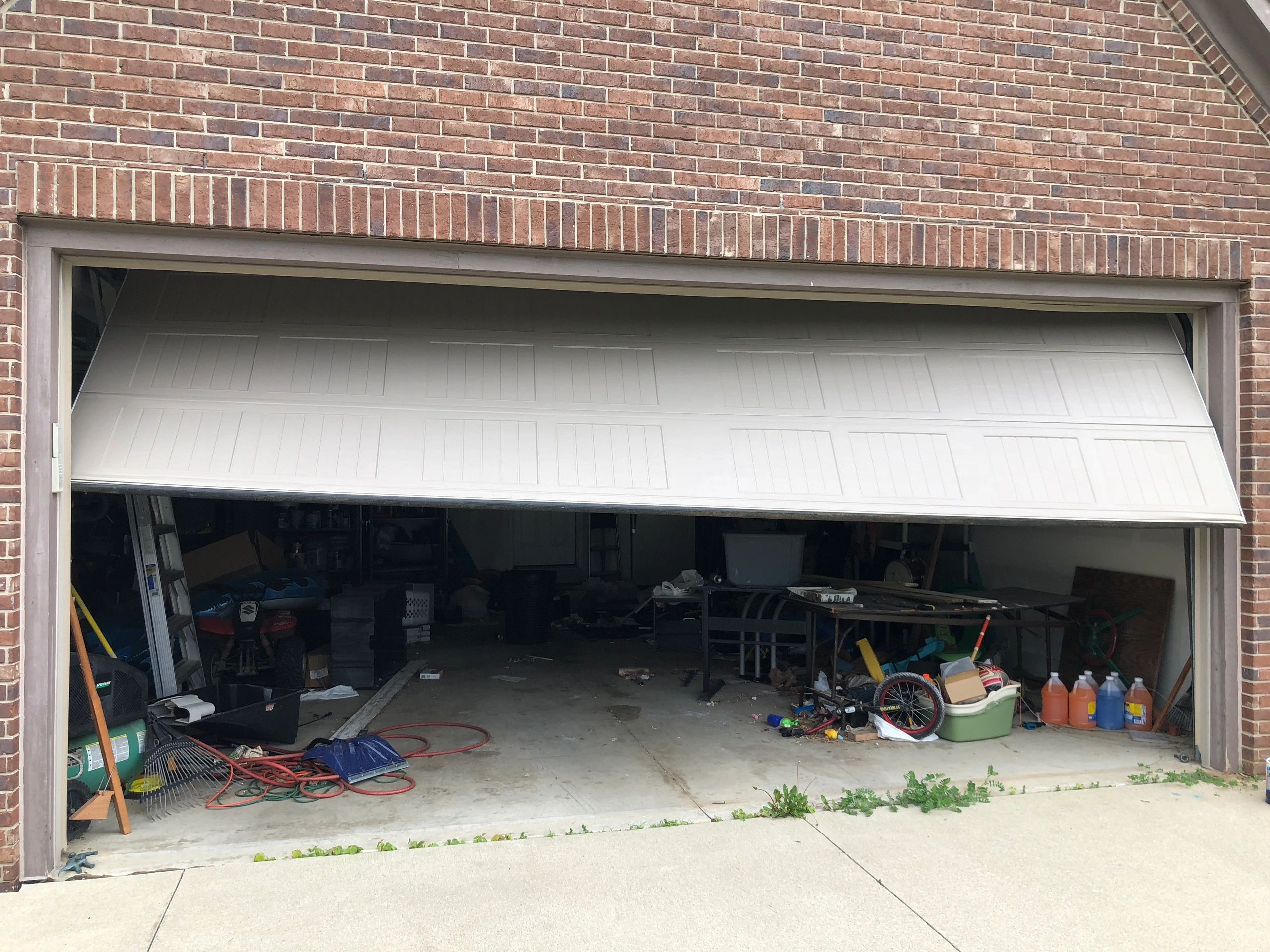
If your garage door looks uneven or jams halfway, track or cable issues are often to blame.
Tracks must remain perfectly aligned for the door to move smoothly. Even small obstructions like pebbles, hardened grease, or bent metal can stop the door entirely.
Cable problems are even more serious. Cables help lift the door evenly on both sides. When one cable frays, slips, or snaps, the door may:
- Lift unevenly
- Jam diagonally
- Slam shut unexpectedly
- Refuse to open at all
I’ve responded to calls where homeowners forced the door up with one broken cable, only to cause severe track damage that doubled the repair cost.
Why Forcing the Door Makes Things Worse
The Costly Mistake Many Homeowners Make
When a garage door is stuck, it’s tempting to push it, pull it, or keep hitting the remote. Unfortunately, this often turns a manageable repair into a major one.
Forcing a garage door can:
- Burn out the opener motor
- Strip internal gears
- Snap cables completely
- Bend tracks beyond repair
- Cause the door to fall suddenly
Garage doors are designed to stop when something isn’t right. When they do, it’s a safety feature, not a malfunction.
When It’s Safe to Troubleshoot — and When to Stop
Safe Checks You Can Do
There are a few basic things homeowners can safely inspect:
- Make sure nothing is blocking the sensors
- Clean sensor lenses gently
- Check that the opener has power
- Look for obvious track obstructions
- Test manual operation by pulling the emergency release
If the door moves smoothly by hand and nothing looks damaged, the issue may be minor.
When to Stop Immediately
You should stop troubleshooting and call a professional if:
- The door feels extremely heavy
- You see a broken spring or frayed cable
- The door is crooked or stuck off-track
- The opener strains loudly or smells hot
- The door slams shut unexpectedly
These situations pose real safety risks and should not be handled without proper tools and experience.
Real-World Example from the Field
A homeowner once called us because their garage door wouldn’t close late at night. They assumed it was the opener. After forcing it down several times, the door slammed crooked and snapped a cable. What started as a simple sensor alignment turned into a full cable replacement and track realignment.
Had they stopped earlier, the repair would have been quick and inexpensive.
Why Professional Garage Door Repair Matters
Garage doors are one of the largest moving objects in your home. Professional technicians don’t just fix the immediate issue — they check balance, tension, safety systems, and long-term wear.
When you search for garage door repair near me, you’re not just paying for a fix. You’re paying for safety, reliability, and peace of mind.
Final Thoughts: Help Is Often Closer Than You Think
If your garage door won’t open, won’t close, or feels stuck, it’s usually your system telling you something is wrong. While some issues are simple, others can become dangerous fast.
If you’re unsure what’s causing the problem, the safest and smartest move is to call a local professional garage door repair company. An experienced technician can diagnose the issue quickly and often provide same-day service to get your door back on track.
Don’t risk injury or expensive damage by forcing a door that’s trying to protect you. A calm, professional repair is usually faster — and far less stressful — than guessing your way through it.