
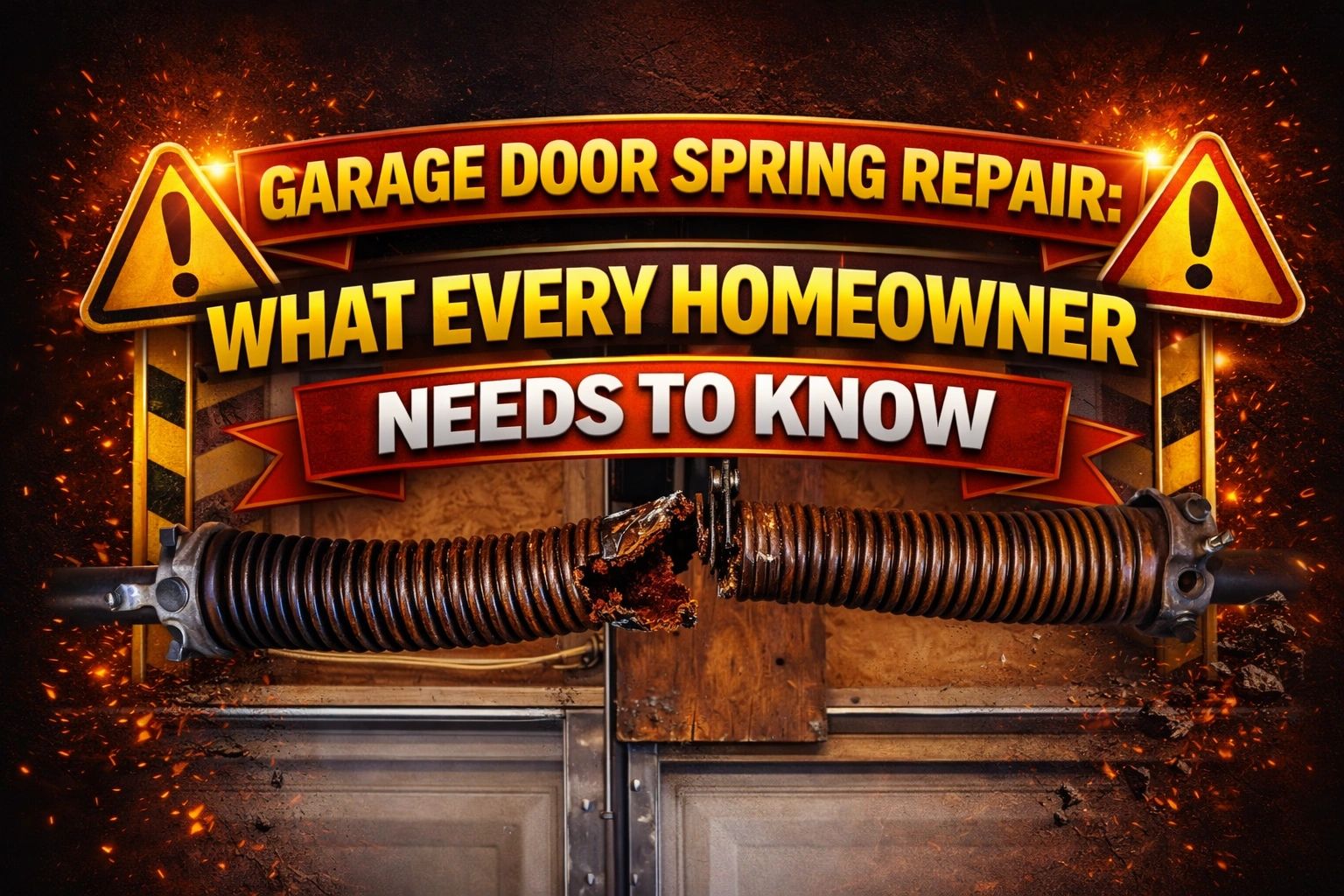
Understanding Spring Failure, Safety Risks, and When to Call a Professional
Garage door springs play one of the most critical roles in your garage door system. They counterbalance the weight of the door, allowing it to open and close smoothly. When a spring fails, the entire system becomes unsafe and unreliable.
Knowing how springs work and recognizing the early signs of failure can help you avoid sudden breakdowns and costly repairs.
How Garage Door Springs Work
Garage door springs store and release energy to lift the heavy weight of the door. Without properly functioning springs, the opener would not be able to lift the door on its own.
There are two main types of garage door springs used in residential systems today.
Torsion Springs
Torsion springs are mounted above the garage door opening and twist as the door moves. These springs are known for smoother operation, better balance, and longer lifespan. Most modern garage doors use torsion spring systems.
Extension Springs
Extension springs run along the sides of the door and stretch during operation. They are typically found on older or lighter doors and require safety cables to prevent dangerous snap-back if they break.
Warning Signs of a Failing Garage Door Spring
One of the most common signs of spring failure is a loud bang coming from the garage. This sound is often mistaken for something falling or breaking, but it is usually the spring snapping under tension.
Another clear sign is a garage door that suddenly feels extremely heavy or refuses to lift. When springs break, the full weight of the door is no longer supported.
In many cases, the door may open only a few inches before stopping. This happens because the opener senses resistance and shuts down to prevent damage.
For torsion spring systems, a visible gap in the coil is a clear indication that the spring has broken and must be replaced immediately.
Why Spring Repair Is Not a DIY Project
Garage door springs are under extreme tension and can cause severe injuries if handled improperly. Professional technicians use specialized tools and follow strict safety procedures to remove and replace springs safely.
Attempting spring repair without experience puts both people and property at risk.
The Risks of Delaying Spring Replacement
Using a garage door with a broken or weakened spring can damage the opener motor, cause cables to snap, and bend tracks. In severe cases, the door can fall suddenly, creating a serious safety hazard.
Replacing a spring promptly prevents additional damage and keeps the entire system operating safely.
How Long Garage Door Springs Typically Last
Most standard garage door springs are rated for approximately 10,000 cycles. One cycle includes one opening and one closing. For an average household, this typically translates to seven to ten years of use.
High-cycle springs are available and can significantly extend the lifespan of the system, especially for homes with frequent garage door use.
Choosing the Correct Replacement Spring
Not all garage door springs are the same. Proper replacement requires selecting the correct spring based on the door’s weight, size, and usage. Using the wrong spring can cause imbalance, excessive wear, and unsafe operation.
A professional technician ensures the correct spring is installed and properly balanced.
Final Thoughts
Garage door spring failure can happen suddenly, but the warning signs often appear well in advance. Heavy doors, unusual noises, limited movement, and visible damage should never be ignored.
Addressing spring issues early keeps your garage door safe, reliable, and cost-effective in the long run.