Nothing spikes your stress like a garage door stopping dead halfway while you’re trying to leave for work or pull in with groceries. If you live in Troy, MI—or nearby in Rochester Hills, Sterling Heights, Madison Heights, Clawson, Birmingham, Bloomfield Hills, Royal Oak, or Auburn Hills—this guide walks you through what’s really going on, how to safely reset things, and the clear red flags that mean it’s time to call for professional garage door repair. You’ll also see when the fix is as simple as a sensor nudge and when it points to bigger issues like garage door spring repair or garage door opener repair. The goal is to get your door moving again without risking injury, property damage, or a burned-out opener.
How a Modern Garage Door Is Supposed to Work
Your garage door is a counterbalanced system. Heavy torsion or extension springs counter the weight of the door so the opener only has to guide and control motion, not muscle the entire load. Cables, drums, rollers, and tracks keep the door aligned and stable. The opener provides controlled lift and safety logic through force settings, travel limits, and photo-eye sensors. When everything is balanced and tuned, the door glides steadily from closed to open and back again. When one of these parts goes out of tolerance—say a spring fatigues, a cable frays, a roller seizes, or a sensor gets bumped—the whole system protests. The most common protest is a stop mid-travel, usually paired with a blinking light, a beeping alert, or a reversal back to where the door started. Understanding the balance between spring force and opener effort is the key to troubleshooting a door that’s frozen halfway.
The Most Common Causes of a Half-Open Door
One of the most frequent reasons a door stalls is sensor interference. Photo-eyes sit near the floor on either side of the opening and must “see” each other. Dust, salt spray, a trash can, or even morning sun can trick the sensors into thinking something is in the path, and the opener will refuse to lower or continue moving. Another everyday culprit is incorrect travel limits or force settings. If limits are out of range, the opener believes the door hit the floor or header early and stops. If force limits are too low, the opener senses resistance—maybe from stiff rollers or misaligned tracks—and halts to prevent damage.
Spring fatigue is a bigger deal and a top cause in Metro Detroit. A torsion spring that’s cracked or near the end of its cycle won’t provide enough counterbalance. The opener starts to lift, feels excessive load halfway up, and shuts down. In those cases, you’re dealing with garage door spring repair, not just a button tap. Cables and rollers add their own drama. A cable that slipped a drum or a roller with worn bearings will bind the door mid-travel. Tracks that took a bump from a vehicle tire can pinch the rollers and halt movement. On older openers, a stripped drive gear or bad capacitor mimics the same halfway stall.
Michigan weather contributes, too. In Troy and surrounding communities, freeze-thaw cycles thicken lubricants, shrink metal tolerances, and swell wooden doors. What felt fine in July can drag in January. If the door sticks only on frigid mornings, cold-stiff parts or marginal force settings are likely involved. When your door is insulated and heavy, even a small loss of balance shows up as a stall.
Safety First: When You Should Immediately Stop
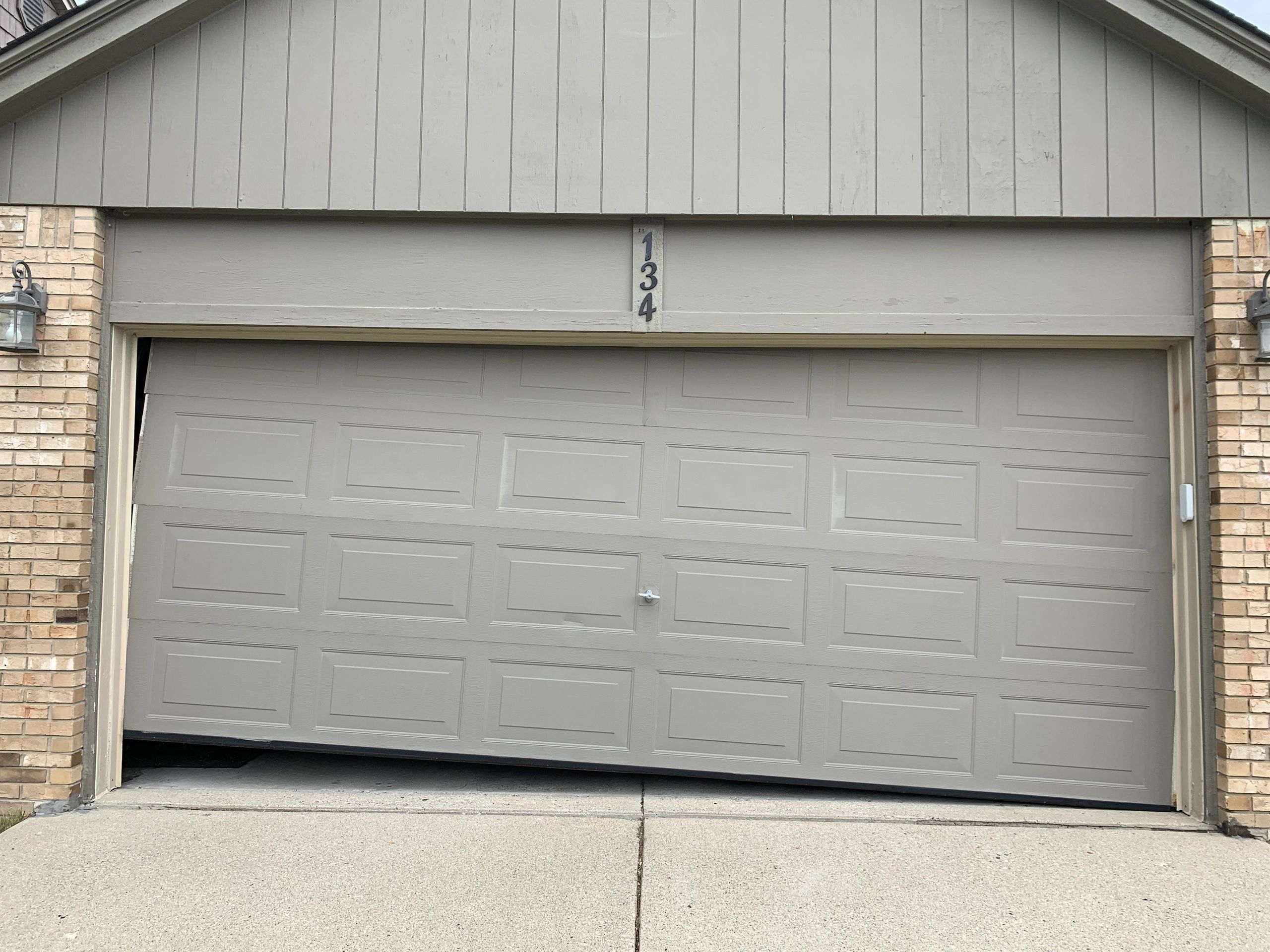
If you see a visible gap in the torsion spring above the door, stop. A broken spring means the opener is trying to lift the door’s full weight and can snap a cable or strip its own drive. If the door looks crooked in the opening or one side hangs lower, stop. That often indicates a cable issue or the door coming off track. If you hear grinding, popping, or smell something electrical from the opener, stop. Continuing to run the motor can turn a minor garage door opener repair into a full replacement. And if the door feels outrageously heavy when you try to lift it with the emergency release, stop. A healthy, balanced door feels manageable; a dangerously heavy door tells you the counterbalance is gone.
A Safe Reset You Can Try Before Calling for Help
Start with power and controls. Confirm the opener is plugged in and that the GFCI or circuit breaker hasn’t tripped. If your wall control has a “lock” or “vacation” mode, hold the lock button for a few seconds to toggle it off. Many half-open situations are just lock mode blocking the remotes while the wall button still works, which looks like a stall if you’re testing from the car.
Move next to the photo-eyes. Stand near the floor and check that both sensor lights are solid. If one is out or blinking, gently rotate the bracket until the light goes steady, then wipe both lenses with a clean cloth. In winter, a thin layer of road film can be enough to confuse the beam. Try the door again and watch for smooth motion.
If sensors aren’t the issue, use the emergency release carefully. Only pull the red cord if the door is fully closed or you can keep it from falling. With the trolley disengaged, try lifting the door by hand a foot or two. If it feels balanced and stays in place when you let go, your springs are probably intact and you may be dealing with friction or opener settings. If it slams shut or feels like lifting a truck, hook the trolley back up without forcing the door and do not continue. That is a sign to schedule garage door spring repair with a professional.
When the door feels reasonably balanced by hand, a quick opener calibration may help. Many units allow you to reset travel limits by holding the program button until the indicator flashes, then running the door fully up and fully down to memorize positions. If your opener is newer, you might also have a force calibration routine that adapts to resistance. Follow your model’s instructions, run a full open and close cycle, and watch and listen. Smooth, consistent travel with no shuddering means you likely corrected a settings issue.
If you notice the door only stalls on the upward path, consider friction. Dry rollers squeal and bind, and bent hinges can twist the sections enough to slow motion. A light, manufacturer-approved lubricant on steel rollers and hinges—not the tracks—can reduce drag. Nylon rollers with sealed bearings don’t need lubricant but do need replacement if the wheels wobble. If the door scrapes the tracks or rubs the header, however, lubrication is not the fix. That situation calls for professional garage door repair near me with proper track alignment tools and shims.
How to Tell if the Problem Is the Opener or the Door
A good way to separate opener issues from door issues is the balance test you did with the emergency release. If the door glides up and down smoothly by hand and stays in place halfway, the counterbalance system is okay and the opener is struggling on its own. That points to garage door opener repair such as a worn sprocket, weak start capacitor, failing logic board, or mis-set limits. If, however, the door fights you, drops hard, or feels rough with manual movement, that’s a mechanical problem. Broken or fatigued springs, frayed cables, bent track, and seized rollers all live on the mechanical side and require trained repair.
Sound offers another clue. A humming opener motor that trips its internal safety without moving the chain or belt suggests an opener part failure. A rattling, clanking door that jerks on the way up suggests binding in the track or uneven lift from a cable problem. Visual checks help, too. Look for sawdust-like shavings beneath the opener cover, which signal gear wear, or shiny metal filings on the track, which indicate roller scuffing.
Special Considerations for Troy, MI and Nearby Communities
Oakland County winters and road salt create a perfect storm for garage doors. Salt mist from winter roads drifts into garages and corrodes cables and bottom fixtures. Freeze-thaw cycles stiffen vinyl weather seals and compress lubricants, increasing drag at the worst possible time. Many homes in Troy, Rochester Hills, and Sterling Heights have insulated double doors that weigh significantly more than single, non-insulated panels, so any loss of spring force shows up earlier as a halfway stall. For homes in Birmingham and Bloomfield Hills with carriage-style or wood overlay doors, moisture swings can expand wood fibers and raise friction points along the tracks and hinges. Scheduling a tune-up each fall, swapping to high-cycle springs when appropriate, and replacing worn rollers with quality, sealed-bearing nylon can turn winter from a headache into a non-event.
When a “Quick Fix” Isn’t the Fix: Clear Red Flags
There are certain situations where continuing to troubleshoot isn’t just unproductive; it’s unsafe. If you can see a gap in a torsion spring or a stretched extension spring, that’s a stop sign. If the door is off track or a cable slipped and wrapped wrong on the drum, leave it as is. If the opener emits a burning smell, a repeated beeping error, or you see smoke, kill power and call for garage door opener repair. If a section is cracked or the stile fasteners are tearing out, the panel itself may be compromised and could buckle under load. And if anyone has backed a bumper into the track, the alignment needs a technician’s hands and tools to correct safely. Pushing through any of these with DIY force tends to multiply damage and can cause injury.
What a Professional Technician Will Do on Arrival
A reputable local tech serving Troy and the surrounding suburbs will start with a door balance and hardware inspection. They’ll weigh the door if needed, verify the correct spring size, and assess whether a high-cycle spring is smart for your usage. They will inspect cables for fraying, check rollers for wobble or seized bearings, and evaluate track alignment and fastener integrity. If springs are intact, they’ll test opener amperage draw, verify travel and force settings, and check capacitor health. For modern openers, they’ll review sensor alignment and examine logic board error histories where available. The visit wraps with lubrication of appropriate points, tightening of hinges and brackets, and a safety reversal test at the photo-eyes and with a controlled obstruction. This approach doesn’t just un-stick today’s stall; it reduces the chance of the problem coming back when the temperature drops again.
Typical Timeframes and Budget Expectations
While every home and door setup is different, many halfway-stuck scenarios fall into predictable buckets. Sensor alignment and limit adjustments can be resolved the same day and usually within a single service window. Garage door spring repair is also typically same-day in the Troy area when the correct springs are stocked on the truck, with the entire process—removal, installation, balance, and safety testing—often completed in under two hours. Cable replacements, roller swaps, and minor track corrections tend to land in a similar timeframe. Garage door opener repair depends on parts availability and model age. A stripped gear and sprocket kit or a failed start capacitor can be turned around quickly, while logic board replacements may depend on brand stock and can require a follow-up if the opener is older. If your opener is nearing the end of its lifespan, a replacement with modern safety features and battery backup may be the smarter long-term investment, especially for attached garages in Royal Oak and Madison Heights where noise control matters.
Preventing the Next Halfway Stall
A little preventive care goes far in Michigan. Start with annual or semi-annual tune-ups. A fall visit before freeze-thaw season allows a tech to catch borderline rollers, stretch-prone cables, and weakening springs before winter exposes them. Keep the photo-eyes clean, especially after snowstorms when slush spray dries into a hazy film. Open and close the door with your eyes and ears a few times each month. Smooth travel, even spacing between coils, and quiet operation are all good signs; squeals, jerks, and rhythmic thumps are early warnings. If your family uses the garage as the main entrance—which is common in Troy and Auburn Hills—ask about high-cycle torsion springs designed for more daily use. If you upgraded to a smart opener, keep the firmware current and replace backup batteries at the manufacturer’s interval so the system behaves predictably during power flickers common in summer storms.
Choosing the Right Local Help
When you search “garage door repair near me,” the results can be overwhelming. Focus on clear indicators of quality rather than just ad placement. Look for consistent NAP details that match the website, real customer photos from jobs in neighborhoods like Troy’s Big Beaver corridor or Rochester Hills’ subdivisions, and descriptions that reference the exact services you need, such as garage door opener repair, spring replacement, off-track correction, and new insulated door installation. Transparent pricing ranges, same-day availability, and warranty statements show a company is prepared and confident. If you manage properties or HOAs in Bloomfield Hills or Birmingham, ask about preventive maintenance plans that reduce emergency calls and extend component life. The best provider is the one who listens to your symptoms, explains the why behind the fix, and leaves you with a door that feels lighter, safer, and quieter than before.
Frequently Asked Questions for Homeowners in Troy, MI
Many homeowners want to know if they can keep using the opener when the door stops halfway. The safest answer is no, not until you understand the cause. Repeated attempts can overheat the motor or strip internal gears, especially on older chain-drive models. Another common question is whether a broken spring can be identified without climbing a ladder. In most cases, yes, because a torsion spring with a break has an obvious gap in the coil. If you are unsure, stand back, use a flashlight from the ground, and do not touch the shaft or set screws. People also ask about cost, and while every situation differs, quick sensor or limit fixes are generally modest, while garage door spring repair, cable replacements, and roller upgrades are mid-range and still typically completed the same day. Finally, homeowners wonder how long a repair lasts. With the right parts—especially high-cycle springs and quality rollers—your door can operate reliably for years, provided it’s tuned periodically for seasonal changes.
The Bottom Line: Know When to Try and When to Call
It’s perfectly reasonable to check power, toggle lock mode, clean and align sensors, and verify the emergency release is engaged. These steps are safe for most homeowners and often resolve the simple causes behind a halfway stall. It’s just as important to recognize the limits. A door that’s heavy in manual mode, a visible spring gap, frayed cables, a crooked door in the opening, or a motor that hums and overheats are all signals to stop and schedule professional help. Whether the fix is garage door opener repair to restore smooth motor control or a full garage door spring repair to rebalance the system, acting promptly prevents collateral damage and gets you back to dependable, quiet operation.
If you’re in Troy, MI or any of the neighboring communities—Rochester Hills, Sterling Heights, Madison Heights, Clawson, Birmingham, Bloomfield Hills, Royal Oak, or Auburn Hills—and your door is stuck halfway, you don’t have to gamble with guesswork. Start with the safe reset steps above, keep an eye out for the red flags, and then bring in a trusted local team for thorough, same-day garage door repair. Your door should feel light, travel smoothly, and respond the same way every time. When it doesn’t, the right diagnosis makes all the difference—today and on the coldest morning of the year.