Most garage door calls in Troy start the same way: the door did something it has never done before. It stopped halfway, made a bang, or sat there while the opener hummed. The good news is that a short list of problems accounts for most of those moments. Knowing what each symptom usually means helps you decide whether it can wait until the weekend or needs attention now.
A loud bang, then the door won't lift
If you heard something like a firecracker in the garage and now the door barely moves, a torsion spring has almost certainly broken. Look above the door. A broken torsion spring shows a clear two-inch gap in the coil.
The opener often still runs, and people assume the opener failed. It didn't. Springs carry the door's weight; the opener only guides a balanced door. Without spring tension, a typical two-car steel door can feel like a few hundred pounds of dead weight. Running the opener against that strains its gears and can pull cables off their drums. This is the one repair on this list that should not wait, and it is never a do-it-yourself job.
The door reverses or won't close
A door that goes down, then reverses, usually points to the safety sensors near the floor. A lens may be dirty, bumped out of line by a bike or trash can, or blinded by low sun. Wiring staples along the wall also loosen over time.
Check that nothing sits in the beam and wipe both lenses. If the small indicator lights on the sensors are steady, the problem may be the opener's travel limits or force settings instead. Those are better left to a technician, because force set too high defeats the safety reversal.
The door hangs crooked or one side drags
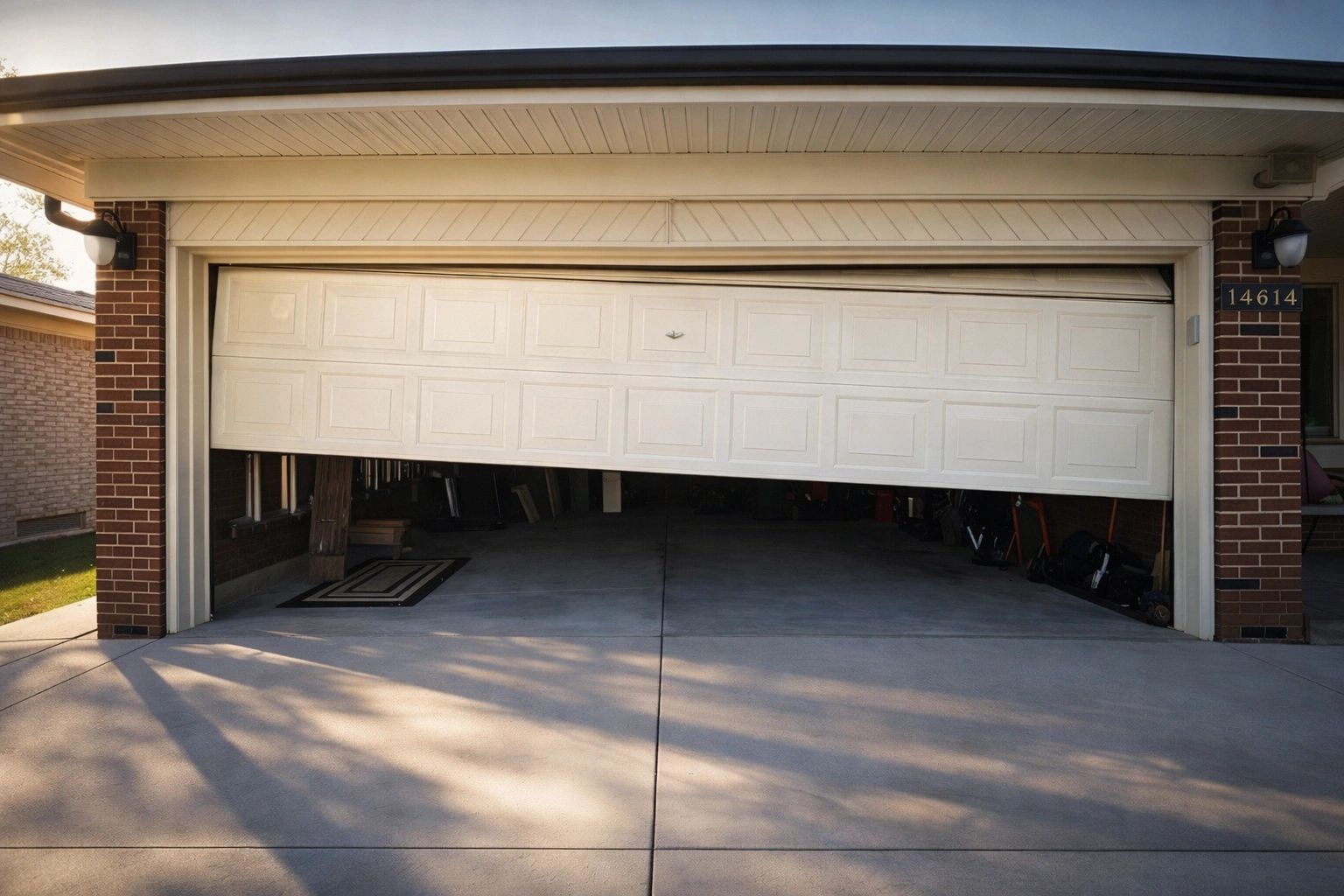
A door that sits lower on one side usually has a cable problem, not a track problem. A frayed cable, or one that jumped its drum, lets one corner drop. Continue operating it and rollers pop out of the track.
If the door is visibly crooked, stop using it. Crooked doors turn into off-track doors, and off-track doors bend sections.
Grinding, squealing and rattling
Noise is the most common complaint and usually the least urgent. Worn rollers, dry hinges and loose hardware cause most of it. Old steel rollers without bearings grind in the track; cracked nylon rollers wobble and clunk.
Light lubrication of hinges, roller bearings and the spring coils helps. Never grease the tracks themselves. If rollers are chipped or wobble, replacing them is a quick repair that makes a real difference.
The opener runs but nothing moves
A humming or clicking opener with a still door points to one of three things: the manual release is disengaged, a gear inside the opener has stripped, or a spring is broken. Pull the door by hand only if it feels balanced. If it's heavy, look for the broken spring before anything else.
Stripped gears are common on older chain-drive units in Troy homes built in the 1970s through 1990s. The gear itself is repairable. Whether it's worth fixing depends on the opener's age and safety features.
Remotes and keypads that stop working
Before assuming the opener is dead, replace the remote battery and check that the wall control's lock button isn't on. Many openers have a lockout feature that disables remotes. Cold weather also shortens battery life, so January is a common month for this call.
Why Michigan winters make it worse
Our freeze-thaw cycles work against garage doors. Bottom seals freeze to the concrete, and the opener tears them loose. Cold, thick lubricant makes a door slow and noisy. Road salt tracked in on cars corrodes bottom brackets and the lower track. Springs that were near the end of their life often break on the first cold morning of the season.
What you can safely do
You can clear the sensor path, clean the lenses, change remote batteries, check the lock button and lubricate hinges and rollers. You can also watch and listen: note when the problem happens, and whether the door is crooked or heavy.
Leave springs, cables, drums, bottom brackets and track adjustments to a professional. These parts hold stored energy, and a small mistake can cause a serious injury.
Frequently asked questions
What is the most common garage door problem? A broken spring is the most common reason a door stops working. Sensor problems are the most common reason it won't close.
Can I use my garage door with a broken spring? No. The opener isn't built to lift the full weight of the door, and forcing it usually adds a second repair.
Is a noisy garage door a sign of a bigger problem? Sometimes. Most noise is rollers and hinges, but a new grinding or popping sound is worth an inspection.
When to call
If your door is heavy, crooked, off track, or the opener strains, we can find the root cause before more parts get damaged. Troy MI Garage Door Service has repaired doors in Troy and across Oakland and Macomb counties since 2013. Call (248) 800-2644 to set up a visit.