
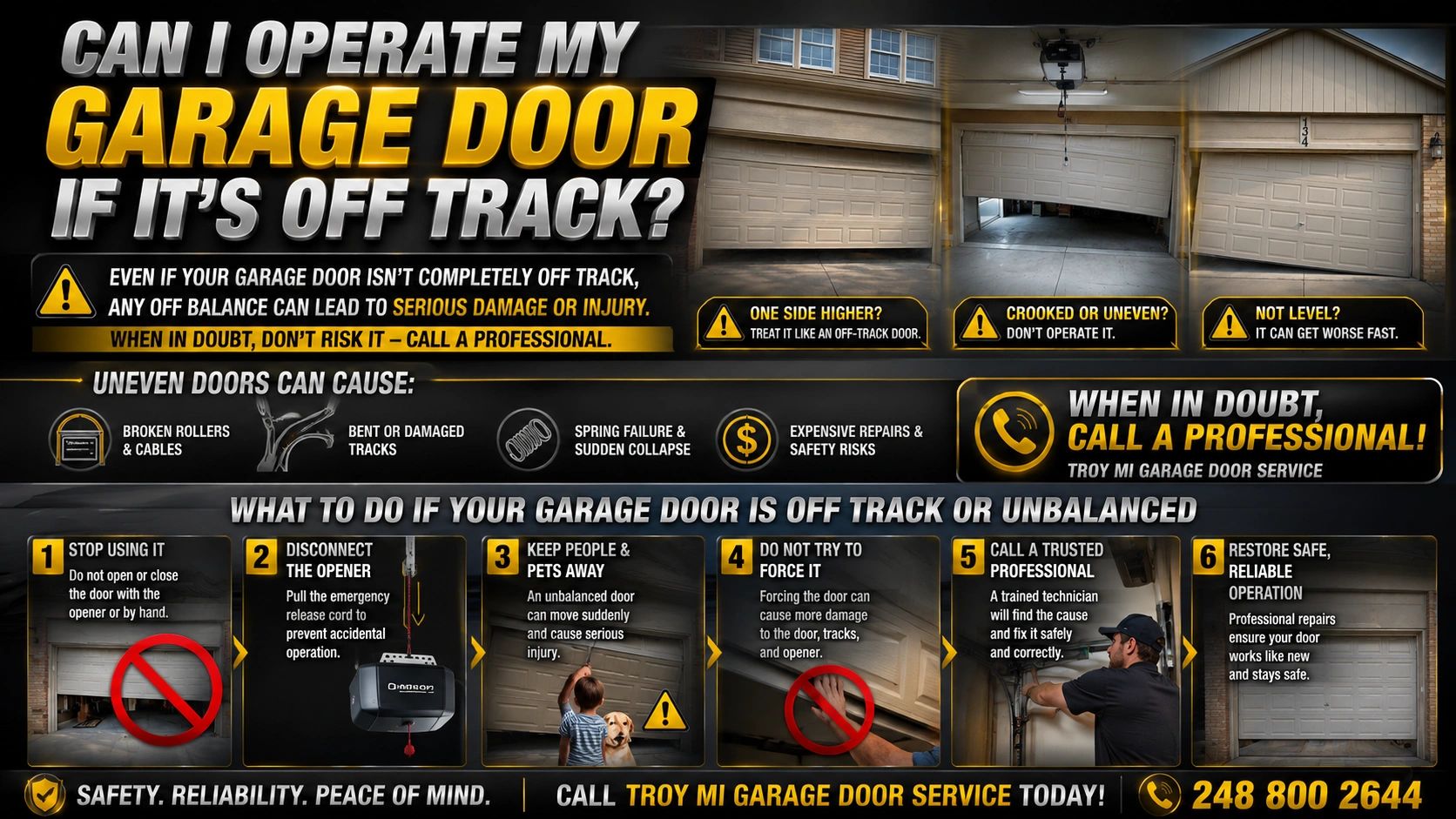
The Hidden Danger of a Misaligned Garage Door
Every garage door owner in Troy, MI, should know this: a door that’s off track is not just malfunctioning—it’s a loaded spring waiting to release. With hundreds of pounds of steel balanced by high-tension cables and precision-aligned tracks, even a slight derailment compromises the entire system. When a garage door shifts off its track, the risk of sudden collapse skyrockets, threatening cars, pets, and loved ones underneath. In Southeast Michigan’s harsh climate, where temperature swings and moisture accelerate metal fatigue, track misalignment becomes even more common—and more dangerous. Attempting to operate an off-track door, even just “once more,” can lead to catastrophic failure, including snapped cables, bent rollers, or a free-falling door. Never use the opener or try to force the door manually. The immediate response should be to stop operation, keep people and pets clear, and call a certified technician. Realignment requires specialized tools and expertise to safely relieve spring tension and restore proper track alignment. Ignoring the problem or attempting DIY fixes only increases the danger. Your safety depends on professional intervention—every time.
5 Critical Dangers of Operating an Off-Track Garage Door
Ignoring a garage door that’s off track isn’t just risky—it can lead to serious harm and expensive damage. Many homeowners in Troy, MI, and surrounding areas underestimate what happens when the system’s balance is compromised. The garage door’s design relies on a precise interplay between springs, rollers, cables, and tracks to safely manage its substantial weight—often over 300 pounds. When one component fails, especially a track misalignment, the entire system is thrown off. Here’s what could happen if you attempt to operate it:
- Sudden Collapse and Structural Failure An off-track door lacks proper support, increasing the risk of it dropping without warning. The imbalance can cause rollers to fully dislodge, leading the door to crash down—potentially damaging vehicles, property, or injuring anyone nearby. This risk is heightened in Southeast Michigan’s freeze-thaw cycles, which weaken metal components over time.
- Irreparable Damage to the Garage Door Opener The opener is engineered to lift a properly aligned door. Forcing it to run an off-track system creates excessive strain, overheating the motor and wearing out gears prematurely. In many cases, the opener must be replaced—adding hundreds to repair costs.
- Severe Personal Injury Risk High-tension torsion springs and cables can snap violently if the door is operated while misaligned. Flying debris or a collapsing door can result in lacerations, fractures, or worse. Children and pets are especially vulnerable in such scenarios.
- Bent Tracks and Roller Damage Continued use forces rollers against the track’s inner walls, warping metal and destroying nylon or steel wheels. Bent tracks compromise smooth operation and make proper realignment difficult—even for professionals.
- Secondary Damage to Wall Framing or Sensors An unbalanced door can scrape walls, damage framing, or knock out safety sensors. Misaligned tracks may also prevent the door from sealing properly, reducing energy efficiency.
Never attempt to open or close a door that’s visibly off track. Instead, disconnect the opener, keep the area clear, and contact a qualified technician in your area for safe realignment.
The Hidden Dangers of Forcing an Off-Track Garage Door
Attempting to operate a garage door that has come off track may seem harmless, but it can lead to catastrophic mechanical failure. When the door is misaligned, the rollers no longer glide smoothly within the track, creating excessive friction that can crack nylon rollers or gouge metal tracks. This resistance increases strain on the lift cables, which may begin to fray or snap under uneven tension—especially if one side of the door binds while the other continues to lift.
The torsion spring system, engineered to balance the door’s heavy weight, becomes dangerously compromised when movement is forced. Uneven lifting creates unbalanced torque, risking spring deformation or sudden breakage. A failed spring can cause violent recoil, posing serious injury risks and damaging surrounding components. Similarly, track brackets may bend or pull away from mounting points, reducing structural support and making proper realignment nearly impossible without replacement.
Homeowners in areas like Troy, MI, where seasonal temperature shifts stress metal components, are especially vulnerable to recurring misalignment after forced use. The combined effect of damaged rollers, weakened cables, and warped tracks often results in complete derailment. To prevent escalating damage and ensure safety, never use an off-track door. Instead, disengage the opener, secure the area, and contact a qualified technician for inspection and repair. Safe, professional correction preserves system integrity and protects your household.
Immediate Steps to Take When Your Garage Door Is Off Track
If you suspect your garage door has come off track, do not attempt to operate it. A misaligned door is under unstable tension and can collapse without warning, posing serious safety hazards. Instead, follow these critical steps to protect your home and family in Troy, MI, and surrounding Southeast Michigan areas.
1. Disengage the Automatic Opener Pull the red emergency release cord to disconnect the garage door opener. This prevents the motor from activating unexpectedly and reduces strain on compromised components like springs and cables.
2. Secure the Area Around the Door Keep children, pets, and vehicles away from the garage entrance. An off-track door can drop suddenly, especially if the counterbalance system is weakened. Close off access if possible to prevent accidental injury.
3. Perform a Visual Check—From a Safe Distance Look for obvious signs of derailment: rollers outside the track, gaps in the rail alignment, or bent sections along the vertical or horizontal tracks. Avoid touching or forcing the door back into place.
4. Do Not Attempt DIY Repairs Garage doors operate under high tension, particularly near torsion springs. Improper handling can lead to severe injury. Even minor misalignments require professional tools and calibration.
5. Contact a Licensed Garage Door Technician Schedule a service call with a certified technician who can safely realign the system, replace damaged rollers or tracks, and restore proper function. In Michigan’s freeze-thaw climate, timely repairs prevent recurring issues and extend system longevity.
Don’t Be Fooled: Why a Partially Working Door Is a Danger Sign
Many homeowners in Troy, MI, make a critical mistake—assuming that if their garage door still opens or closes, even sluggishly, it must be safe to use. This misconception puts families and property at risk. A garage door operating while off track or misaligned is under extreme mechanical stress, and continued use can lead to sudden failure. The truth is, garage doors are precision-engineered systems relying on balanced tension from springs, intact cables, and properly aligned tracks. When one component, like a roller or track section, shifts even slightly, the entire system is compromised.
Some believe minor grinding noises or slight jerking during operation are normal wear and don’t require immediate attention. On the contrary, these are early warnings of potential derailment. In Southeast Michigan’s climate, where temperature swings cause metal to expand and contract, small misalignments can quickly worsen. What starts as a subtle wobble may escalate into a completely derailed door or broken cable—both of which pose serious safety hazards.
Never ignore visual cues like uneven gaps along the track or a door that sags to one side. These are not minor issues to delay addressing. The safest approach is simple: if something feels or sounds off, stop using the door and schedule a professional inspection. Preventive action protects your home, vehicle, and loved ones.
Frequently Asked Questions About Off-Track Garage Doors
What happens if my garage door goes off track? When a garage door comes off track, it loses its structural guidance system, leading to unstable movement or complete immobilization. This misalignment places extreme stress on rollers, cables, and the opener mechanism. In Southeast Michigan’s climate, frequent temperature shifts can worsen metal fatigue, increasing the chance of sudden failure.
Is it safe to operate a garage door that’s off track? No—operating an off-track garage door is extremely dangerous. The door’s balance is compromised, and continued use can lead to collapsing panels, broken cables, or uncontrolled dropping. This poses serious injury risks, especially in homes with children or pets.
Can weather conditions in Troy, MI, contribute to track misalignment? Yes. Harsh winters with ice buildup, freeze-thaw cycles, and humidity fluctuations accelerate wear on tracks and rollers. These conditions often cause expansion, contraction, or rust that increases derailment risks over time.
Should I attempt to fix an off-track door myself? Never attempt DIY repairs on an off-track door. Garage doors operate under high tension from torsion springs and cables. Without proper training and tools, self-repair attempts can result in severe injury or further damage.
When should I call a professional? Contact a certified technician immediately if you notice uneven movement, grinding noises, or visible roller displacement. Prompt professional intervention ensures safe realignment and prevents costly secondary damage.
Safety First: Protecting Your Home and Family Starts with Smart Decisions
Operating a garage door that’s off track isn't just risky—it's potentially hazardous. The complex balance of springs, cables, and rollers that safely lift hundreds of pounds can fail without warning when the system is compromised. In Southeast Michigan and Parma, MI, where weather fluctuations stress metal components through constant expansion and contraction, these dangers are amplified. Ignoring misalignment or trying to force the door open can lead to sudden collapse, serious injuries, or costly damage to your vehicle and property.
The safest and most effective response is always professional repair. Certified technicians have the tools, training, and experience to diagnose the root cause—whether it’s a broken cable, bent track, or worn roller—and restore your system safely. Do not attempt DIY fixes on high-tension garage door components; the risk far outweighs any perceived savings.
Preventative maintenance is your best defense. Schedule biannual inspections, keep tracks clean and lubricated, and act immediately if you notice jerking, grinding, or uneven movement. By staying proactive, especially before Michigan’s harsh winters, you extend your door’s lifespan and ensure reliable, safe operation year-round.
If you suspect your garage door is off track, stop using it and contact a licensed professional today. Your family’s safety depends on it.