
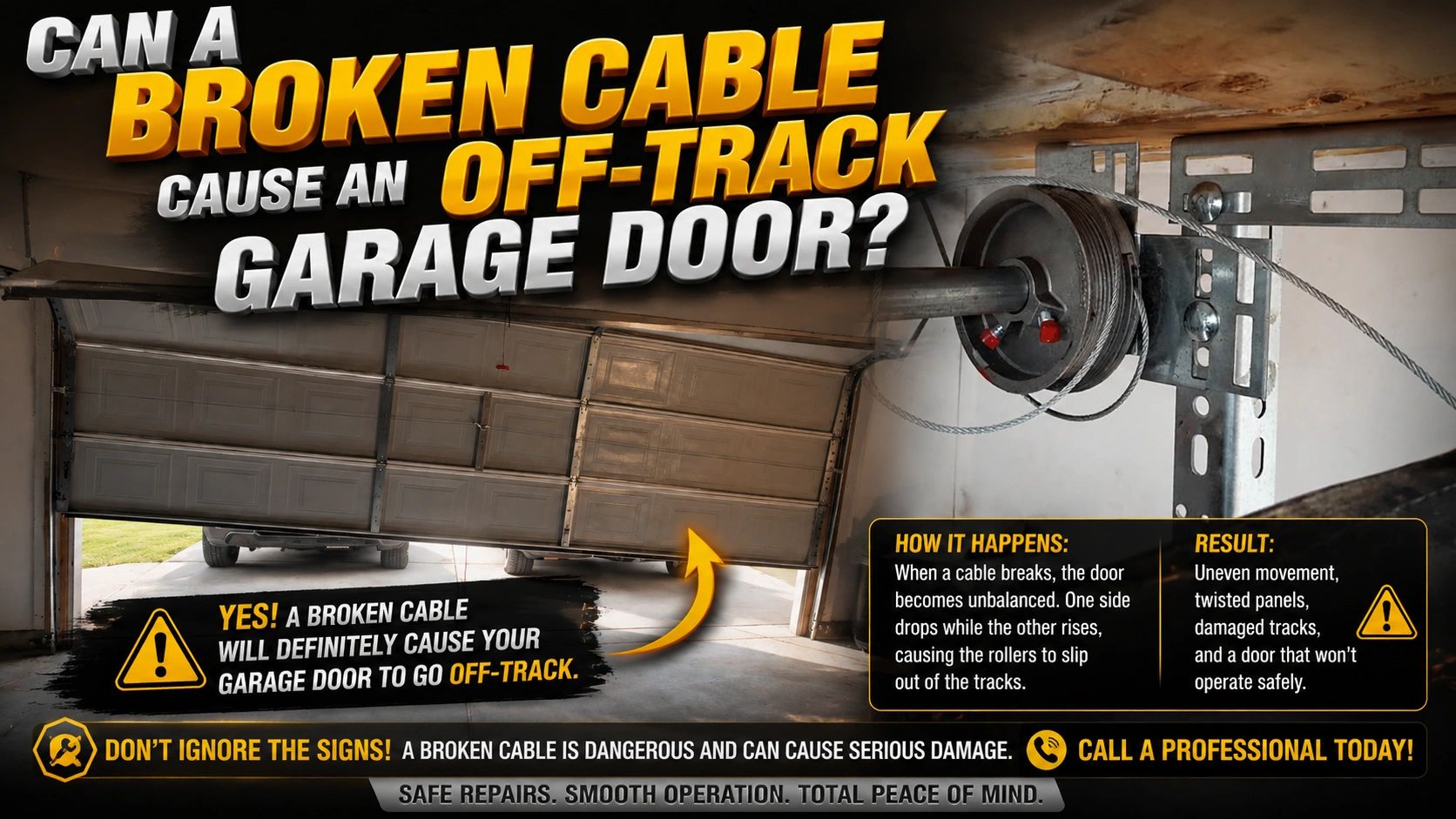
What Happens When a Garage Door Cable Breaks?
When a garage door cable snaps, the mechanical balance of the entire system is immediately compromised. Cables work in tandem with torsion or extension springs to evenly distribute the immense weight of the door—typically hundreds of pounds—during operation. Once one cable breaks, that tension becomes uneven, causing the door to tilt or shift to one side as it opens or closes. This misalignment places extra strain on the remaining cable, rollers, tracks, and even the opener mechanism, increasing the risk of further damage.
You may notice the door dragging on one side, struggling to lift evenly, or suddenly jumping off the track altogether. Misaligned rollers can jam in the track, leading to binding or complete operational failure. In Troy, MI, where temperature changes can already stress metal components, a broken cable accelerates wear and creates dangerous conditions. Attempting to operate the door in this state risks snapping the second cable or damaging the torsion spring assembly.
For safety and system integrity, disengage the opener and avoid using the door until a professional assesses and replaces the cables. Regular visual inspections—checking for frayed wires, rust, or loose ends on cables—can catch wear early and prevent off-track incidents.
How a Failed Cable Can Derail Your Garage Door: A Step-by-Step Explanation
A broken cable is more than just a minor malfunction—it’s a primary catalyst for garage door derailment. Understanding how this failure unfolds helps homeowners in Troy, MI, and similar climates recognize risks early and prevent hazardous situations.
Step 1: Recognize the Cable’s Role in Balance Garage doors rely on a pair of lift cables attached to the bottom corners of the door and wound around a drum connected to the torsion or extension spring system. These cables evenly distribute the door’s weight during operation. When one fails, that balance collapses.
Step 2: Identify Immediate Effects of a Break Once a cable snaps, the door lifts unevenly. The side with the intact cable rises, while the broken side sags. This misalignment forces rollers on the affected side to shift out of the track, especially during upward movement.
Step 3: Watch for Roller and Track Stress Rollers are designed to move smoothly within steel tracks. But when unbalanced, the off-center tension pulls them sideways. In severe cases, rollers can jump the track entirely or become jammed, creating loud banging or grinding noises.
Step 4: Understand Counterbalance System Strain The torsion or extension spring system compensates for the door’s weight. A cable failure overloads this system, increasing stress on drums, brackets, and mounting hardware. Over time, this can lead to further derailment or structural damage.
Step 5: Prevent Escalation with Early Detection Regularly inspect cables for fraying, rust, or loose winding. If your door jerks, tilts, or makes popping sounds, disengage the opener and avoid use until professionally evaluated. In Southeast Michigan’s harsh weather cycles, proactive checks are essential for safety and longevity.
5 Warning Signs and Noises That Signal Garage Door Cable Damage
Garage door cables play a critical role in balancing and guiding your door’s movement—but when they begin to fail, they often send clear auditory and visual signals. Homeowners in Troy and surrounding areas should stay alert to these five warning signs that could indicate cable wear or imminent breakage.
- Snapping or Popping Sounds A sudden pop during operation is one of the most telling signs of cable failure. These cables operate under extreme tension, and a loud snap may mean a strand has broken or the entire cable has come loose. Never attempt to open or close the door after hearing this sound.
- Visible Fraying or Kinking Inspect the cables running along the tracks. If you see exposed wires, coiling, or kinks, the cable is compromised. Even minor fraying can quickly escalate into a complete rupture, especially in Southeast Michigan’s fluctuating temperatures.
- Uneven Door Movement If one side of the door rises faster than the other or appears to sag, it’s likely due to a weakened or broken cable. This imbalance puts extra strain on the opener and remaining hardware.
- Grinding or Scraping Noises While often linked to rollers or tracks, a grinding sound can also stem from a loose cable rubbing against the drum or track. This friction wears the cable faster and can damage other components.
- Loose or Dangling Cables If the cable has come off the drum or is hanging slack, do not operate the door. This is a serious safety hazard that requires professional reattachment or replacement.
Addressing cable issues early prevents dangerous malfunctions and costly system damage—especially important for homeowners preparing for Michigan’s seasonal weather extremes.
How to Safely Inspect Your Garage Door Cables for Damage
Garage door cables play a critical role in balancing and lifting your door, operating under intense tension that can lead to serious hazards if compromised. For homeowners in Troy, MI, where temperature fluctuations contribute to metal fatigue, regular inspection of these components is essential for safety and performance.
- Disconnect the Opener and Secure the Door Before beginning, disengage the automatic opener using the release cord. Ensure the door is fully closed and stable—never attempt an inspection while the door is open or in motion.
- Visually Examine Both Cables Along the Tracks Look closely at the cables running from the bottom of the door up to the drums near the torsion spring. Check for fraying, kinking, or rust, especially near the bottom brackets where stress is highest.
- Assess Tension and Alignment Both cables should appear evenly taut. If one appears loose or sagging, it may be damaged or improperly seated, indicating immediate risk.
- Check for Wear at Attachment Points Inspect where cables connect to the bottom brackets and drums. Worn grooves or slipped cables are red flags that require professional adjustment.
- Do Not Touch Damaged Cables Even minor fraying can lead to sudden failure. Avoid adjusting or replacing cables yourself—these tasks require specialized tools and training due to the high force involved.
Perform this inspection biannually to catch early signs of wear and maintain safe, reliable operation in Southeast Michigan’s demanding climate.
Why DIY Garage Door Cable Repairs Are Riskier Than You Think
Garage door cables are under extreme tension—often hundreds of pounds of pressure—making them one of the most dangerous components to handle without proper training. When a cable snaps or becomes frayed, it’s tempting to try a quick fix, especially if you're used to tackling home repairs in Troy or across Southeast Michigan. But attempting to replace or adjust a broken cable on your own can lead to serious injury or further damage to the system. These cables work in tandem with torsion springs to balance the weight of the door, and any mistake during reattachment can cause the door to collapse unexpectedly.
Even loosening the wrong bolt can release stored energy instantaneously, sending hardware flying or trapping limbs. Homeowners often underestimate how precisely these systems must be calibrated—improper re-tensioning leads to uneven operation, accelerated wear, and potential failure of other parts like rollers or tracks.
Additionally, the required tools—winding bars, clamps, and secure anchoring points—are specialized and must be used correctly. Without industry knowledge, missteps are common. Instead of risking safety, schedule an inspection with a certified technician who can diagnose the root cause, safely manage cable replacement, and ensure all components are functioning securely. Remember: when it comes to high-tension garage door systems, professional intervention isn’t just recommended—it’s essential for safety.
Frequently Asked Questions About Broken Cables and Off-Track Garage Doors
What causes a garage door cable to break? Garage door cables snap due to prolonged tension, corrosion, or fraying from wear and tear. In climates like Troy, MI, where humidity and temperature swings accelerate metal fatigue, cables degrade faster. Misaligned tracks or worn drums also create uneven stress, increasing the risk of breakage.
Can a broken cable cause my garage door to go off-track? Yes—cables help balance the door during operation. When one fails, the unbalanced weight can force rollers out of the track, especially during movement. This often results in sticking, scraping, or complete derailment.
Is it safe to operate a garage door with a broken cable? No. A broken cable compromises the entire system’s balance and safety. The door may become unstable, drop unexpectedly, or place excess strain on the opener. Immediate disuse and professional repair are essential.
What are the dangers of an off-track garage door? An off-track door poses serious risks including sudden collapse, damage to panels or walls, and injury to people or pets nearby. The misalignment can also overload the opener motor, leading to costly electrical or mechanical failure.
How is a garage door put back on track? A technician will first inspect for obstructions, then manually realign the door using winding bars and clamps to relieve spring tension. Damaged rollers, bent tracks, or broken cables are repaired or replaced before testing smooth operation.
Should I attempt to fix a broken cable myself? Absolutely not. Torsion springs and cables operate under extreme tension—improper handling can lead to severe injury. Certified technicians use specialized tools and safety protocols to ensure secure, lasting repairs.
How can I prevent cables and tracks from failing? Schedule biannual inspections, lubricate moving parts with silicone spray, and keep tracks clean of debris. Watch for early signs like fraying cables, sticking movement, or unusual noises—especially in Southeast Michigan’s harsh seasonal transitions.
Don’t Let a Small Cable Issue Derail Your Entire Garage Door System
A frayed or broken cable might seem like a minor problem at first glance, but it can quickly escalate into a major safety hazard and system failure. In the garage door industry, cables play a critical role in balancing the weight of the door during operation, working in tandem with torsion springs and rollers. When one fails, the entire mechanism is thrown off track—literally. Uneven lifting, loud banging noises, and doors that stick or sag are all telltale signs of cable-related strain. Left unaddressed, this imbalance places excessive stress on the opener motor, tracks, and other hardware, leading to secondary damage that’s far more costly to repair. In extreme cases, a snapped cable can cause the door to collapse unexpectedly, putting people and property at risk—especially in homes with attached garages or where children play nearby.
For homeowners in Southeast Michigan, where winter freeze-thaw cycles accelerate metal fatigue and rust, regular inspection is non-negotiable. Look for visible fraying, kinks, or separated strands during biannual maintenance checks. If you spot any wear—or hear associated clanging noises—stop using the door immediately. These aren’t DIY fixes; high-tension components require professional tools and training to replace safely.
Your next step? Perform a visual inspection today and schedule a tune-up with a certified technician if anything looks off. Staying proactive protects your home, your family, and your investment. A well-maintained garage door lasts longer, operates smoothly, and keeps your household secure through every season.