
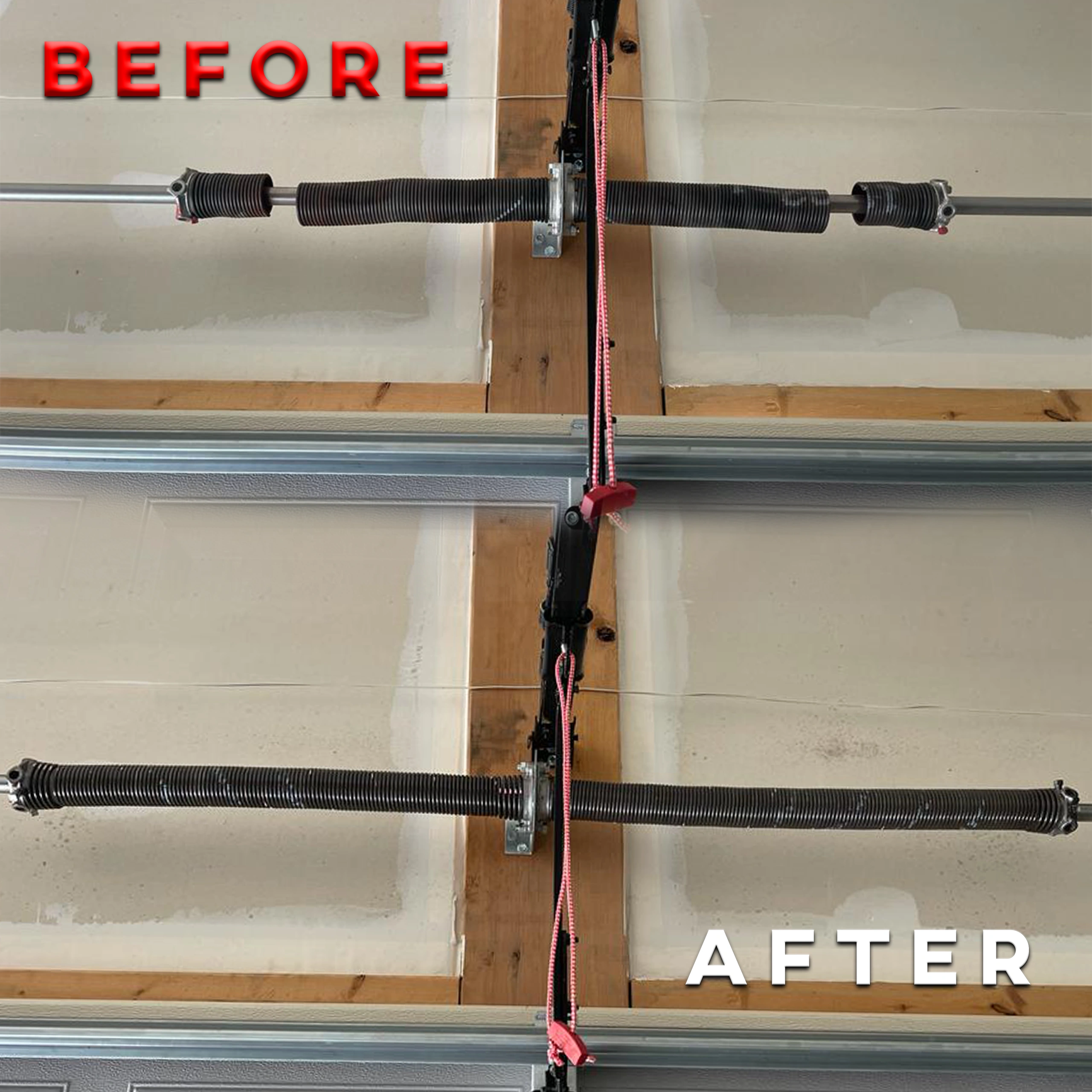
As a professional garage door technician with over 12 years of hands-on experience, I’ve seen firsthand how a broken garage door spring can bring an entire household to a standstill. One minute everything works fine, and the next, your garage door won’t open, your car is trapped inside, and you’re left wondering what went wrong.
Garage door spring repair is one of the most common — and most critical — services we perform. Unfortunately, it’s also one of the most misunderstood. In this guide, I’ll walk you through how garage door springs work, why they fail, the dangers of ignoring the problem, and why professional repair is the safest and smartest option.
What Garage Door Springs Do and Why They’re Critical
Your garage door is likely the largest moving object in your home. Most residential garage doors weigh anywhere from 150 to over 300 pounds. The reason you can lift it with one hand — or with a motor — is because of the springs.
Garage door springs counterbalance the full weight of the door. When properly calibrated, they allow the door to open smoothly, stay balanced at any height, and close safely. Without functioning springs, the opener is forced to carry the entire load, which it was never designed to do.
When a spring breaks, the system immediately becomes unsafe. The door may slam shut, refuse to open, or place extreme strain on other components. This is why garage door spring repair is not optional — it’s essential for safety and functionality.
Torsion Springs vs. Extension Springs: What’s the Difference?
Understanding the type of spring your garage door uses helps explain how it fails and how it’s repaired.
Torsion Springs
Torsion springs are mounted horizontally above the garage door opening on a metal shaft. When the door closes, the springs wind up, storing energy. When the door opens, that energy is released in a controlled manner to lift the door.
Most modern homes use torsion springs because they are more durable, smoother in operation, and safer when they break. A proper torsion spring replacement requires precise measurements, correct winding, and professional-grade tools.
Extension Springs
Extension springs are mounted along the sides of the door, stretching as the door closes and contracting as it opens. These systems are more common in older garages.
When an extension spring breaks, it can snap violently if safety cables are missing or damaged. This is one of the reasons extension spring systems are considered less safe and are often upgraded during repairs.
Clear Signs You Have a Broken Garage Door Spring
A broken spring doesn’t always look dramatic, but the symptoms are usually obvious if you know what to look for.
One of the most common signs is when your garage door won’t open, even though the opener is running. The motor may hum, strain, or shut itself off to prevent damage.
You may also hear a loud bang from the garage — many homeowners describe it as a gunshot. That sound is often a torsion spring snapping under tension.
Other signs include the door lifting a few inches and stopping, the door feeling extremely heavy when lifted manually, or the door slamming shut instead of closing smoothly. In some cases, you’ll visibly see a gap in the torsion spring or a dangling extension spring.
Any of these symptoms indicate a broken or failing spring that requires immediate garage door spring repair.
Why Operating a Door With a Broken Spring Is Dangerous
Trying to use your garage door with a broken spring puts both people and property at risk.
Without spring tension, the door’s full weight is uncontrolled. This can cause the door to crash down unexpectedly, potentially damaging vehicles, injuring people, or breaking the door itself.
Your garage door opener is also at risk. Openers are designed to guide and assist, not lift hundreds of pounds. Continued use can burn out the motor, strip gears, or bend the rail — turning a spring repair into a much larger and more expensive job.
From a safety standpoint, operating a door with a broken spring is one of the most dangerous situations we encounter in garage door repair.
Why DIY Garage Door Spring Repair Is Unsafe
I understand the temptation. You watch a few videos, buy springs online, and think you can save money. Unfortunately, garage door spring repair is not a typical DIY project.
Torsion springs are under extreme tension. One wrong move can cause a winding bar to slip or a spring to spin uncontrollably. I’ve seen serious hand injuries, broken wrists, facial injuries, and worse — all from DIY attempts gone wrong.
Even if no one gets hurt, incorrect spring sizing or improper winding can cause the door to be unbalanced. This leads to premature wear on rollers, cables, hinges, and the opener.
Professional technicians use calibrated tools, safety procedures, and precise measurements to ensure the repair is done correctly the first time.
What Professional Spring Replacement Involves
When you call a professional for garage door spring repair, the process is much more involved than simply swapping parts.
First, we inspect the entire door system. Springs don’t fail in isolation — worn cables, misaligned tracks, or failing bearings often contribute to the problem.
Next, we measure the door’s weight and height to select the correct spring size. This step is critical. Installing the wrong spring can shorten the life of the entire system.
During a torsion spring replacement, we safely release remaining tension, replace the springs, reset the shaft, and precisely wind the new springs to manufacturer specifications.
Finally, we balance the door, test the opener, lubricate moving parts, and ensure smooth, quiet operation. A properly repaired door should lift evenly and stay in place when opened halfway.
How Long Garage Door Springs Typically Last
Garage door springs are rated by cycles, not years. One cycle equals opening and closing the door once.
Standard springs are typically rated for about 10,000 cycles. For many households, that translates to 7–10 years of use. Homes with multiple drivers or heavy daily use may see shorter lifespans.
High-cycle springs are available and are often recommended for busy households. While they may cost more upfront, they last significantly longer and reduce the likelihood of sudden failure.
Regular maintenance and lubrication can also help extend spring life.
Cost Factors in Garage Door Spring Repair
While exact pricing varies, several factors influence the cost of garage door spring repair.
The type of spring matters. Torsion spring replacement generally differs from extension spring systems. Door size, weight, and height also play a role, as heavier doors require stronger springs.
Labor complexity, additional worn components, and whether the repair is performed as an emergency or same-day service can also affect cost.
The most important thing to remember is that quality parts and professional installation prevent repeat failures and costly damage down the line.
Why Local Professional Service Matters
Hiring a local garage door repair company ensures faster response times, proper knowledge of regional door styles, and accountability. Local technicians rely on reputation, not volume, and are more likely to stand behind their work.
When your garage door won’t open, waiting days for service isn’t an option. A trusted local professional can restore safety and access quickly and correctly.
Call a Local Garage Door Spring Repair Professional Today
If you’re dealing with a broken garage door spring, don’t wait — and don’t risk injury by attempting a DIY fix. Garage door spring repair is a job that demands experience, precision, and respect for safety.
A qualified local garage door repair company can diagnose the issue, perform a proper torsion spring replacement if needed, and get your door operating safely again — often the same day.
If your garage door won’t open or shows signs of spring failure, contact a local professional today and restore peace of mind with expert, same-day service.